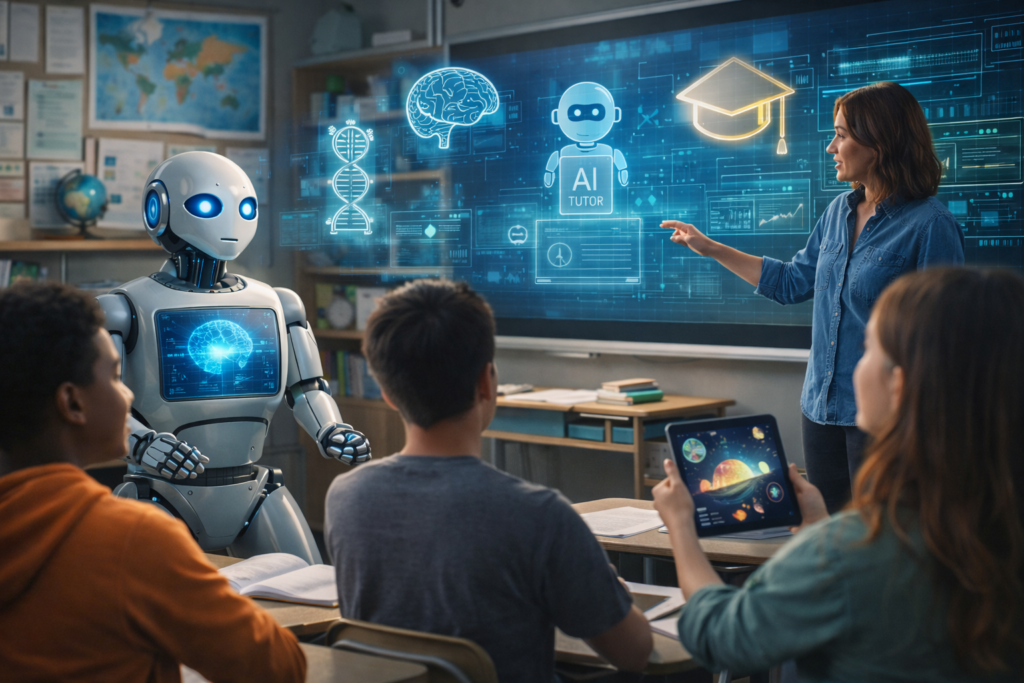
Using AI for personalized learning means using artificial intelligence tools to tailor instruction and pathways to individual student needs. This approach helps address student strengths, weaknesses, and interests, improving engagement and outcomes. To build effective plans, educators must combine technology with clear goals, regular assessment, and adaptable roles for both teachers and learners.
What Is Personalized Learning With AI?
Personalized learning involves adjusting educational content, pacing, and activities to the needs of each student. Artificial intelligence makes this possible at scale by analyzing data about how students learn and recommending next steps or resources. Effective personalized learning relies on a balance between automated AI recommendations and human oversight, known as a human-in-the-loop approach (ScienceDirect).
Key Steps to Implement AI for Personalized Learning
According to implementation guidance (RAND Corporation), educators and institutions can take the following actionable steps:
- Define Clear Learning Goals: Determine specific academic outcomes and soft skills to target for each learner or group.
- Assess Student Needs and Skills: Collect diagnostic data—using quizzes, assignments, or AI-driven assessment platforms.
- Select Appropriate AI Tools: Choose AI systems that can analyze data and suggest customized learning content and pacing.
- Create Learning Pathways: Develop adaptable plans that adjust as a student makes progress or faces challenges.
- Monitor Progress and Adapt: Use AI dashboards or reports to regularly check each learner’s development, updating plans as needed.
- Engage Teachers as Facilitators: Educators should guide, motivate, and intervene when students require support, rather than solely delivering content.
Checklist: Essential Elements for Using AI in Personalized Learning
| Step | Purpose | Tips |
|---|---|---|
| Set goals | Clarify what students should achieve | Involve students in goal setting |
| Gather learning data | Understand strengths and weaknesses | Use both AI diagnostics and traditional methods |
| Choose AI platform | Personalize resources and pace | Pick systems with teacher oversight |
| Review & adapt plan | Respond to progress and changes | Schedule regular check-ins |
| Teacher guidance | Motivate and support students | Offer intervention as needed |
Technology Options and Limitations
AI-powered systems like personalized learning platforms use learner profiles and real-time data to adapt activities and content. An example is IBM’s Personalized Learning Pathways (PLP) application, which allows educators to map out student skills, select content, apply interventions, and track results (IBM Research).
However, adopting these solutions has challenges:
- Integration: Not all platforms work seamlessly with existing school systems.
- Generalization: Some solutions are field-tested in specific environments and may not fit all contexts.
- Teacher Preparation: Success depends on teacher training and willingness to adapt roles.
- Data Privacy: Collecting and analyzing student data requires strict privacy protections.
Consider these aspects when choosing or designing an AI solution for your school or classroom.
AI and the Teacher’s Role: Human-in-the-Loop
AI can recommend activities and monitor student growth, but it does not replace the need for skilled educators. Research highlights a shift: teachers act as facilitators and motivators, stepping in for focused support or enrichment (ScienceDirect).
Best practice involves teachers reviewing AI-generated plans and making personalized adjustments. Empathy, encouragement, and relationship-building remain essential parts of the learning process.
Illustrative Example: Designing a Personalized Plan With AI
Scenario: An educator wants to use an AI tool to help a middle school student struggling in mathematics. The goal is to bring the student’s performance to grade level within a semester.
- Step 1: The teacher administers a diagnostic test; results show the student needs help with fractions and decimals.
- Step 2: The AI platform suggests a pathway with interactive lessons focusing on these topics at a slow pace, with quick activities on topics the student has mastered.
- Step 3: The student completes lessons and practice problems; the AI tracks errors and progress.
- Step 4: Each week, the teacher reviews the AI progress report and schedules a 1:1 session if the student stalls or shows frustration.
- Step 5: If improvement is slow, the plan adapts: more visual aids, or a shift to group work as suggested by teacher observation.
This example illustrates the flexible approach possible when AI and active teacher involvement are combined for effective personalized learning.
Tips for Effective AI-Driven Personalized Learning
- Start Small: Pilot AI tools with a single class or subject before wider rollout.
- Involve Stakeholders: Get student, parent, and teacher input on goals and progress.
- Invest in Training: Ensure teachers are comfortable with chosen technology and know how to act on AI insights.
- Protect Data: Confirm that platforms meet privacy and security standards.
Possible Challenges and How to Address Them
- Uneven Access: Some students may lack devices or internet. Consider offline modules or device lending programs.
- Over-Reliance on AI: Balance automation with teacher judgment, especially for social-emotional skills.
- Change Management: Prepare for adjustment periods as educators and students adapt to new roles and tools.
For more context on personalized learning with AI in modern classrooms, explore our article on AI and Personalized Learning for Children.
Next Steps
Start by identifying specific learning challenges in your setting. Evaluate AI platforms that best fit your educational context, prepare staff with targeted training, and maintain an active human-in-the-loop process. Gradual, evidence-based implementation will help you realize the value of AI for personalized learning while maintaining flexibility and empathy in education.
Sources and further reading
- (PDF) Observations and Guidance on Implementing Personalized Learning
- Personalized Learning Pathways: Enabling intervention creation and tracking for IBM J. Res. Dev – IBM Research
- Personalized education and Artificial Intelligence in the United States, China, and India: A systematic review using a Human-In-The-Loop model – ScienceDirect