
The typical AI tutor safety checklist may give parents or teachers a sense of control, but many checklists overlook serious safety gaps such as inappropriate content and failed interventions in crises. Discover how to build a more effective, evidence-based AI tutor safety checklist that addresses key risks and protects children.
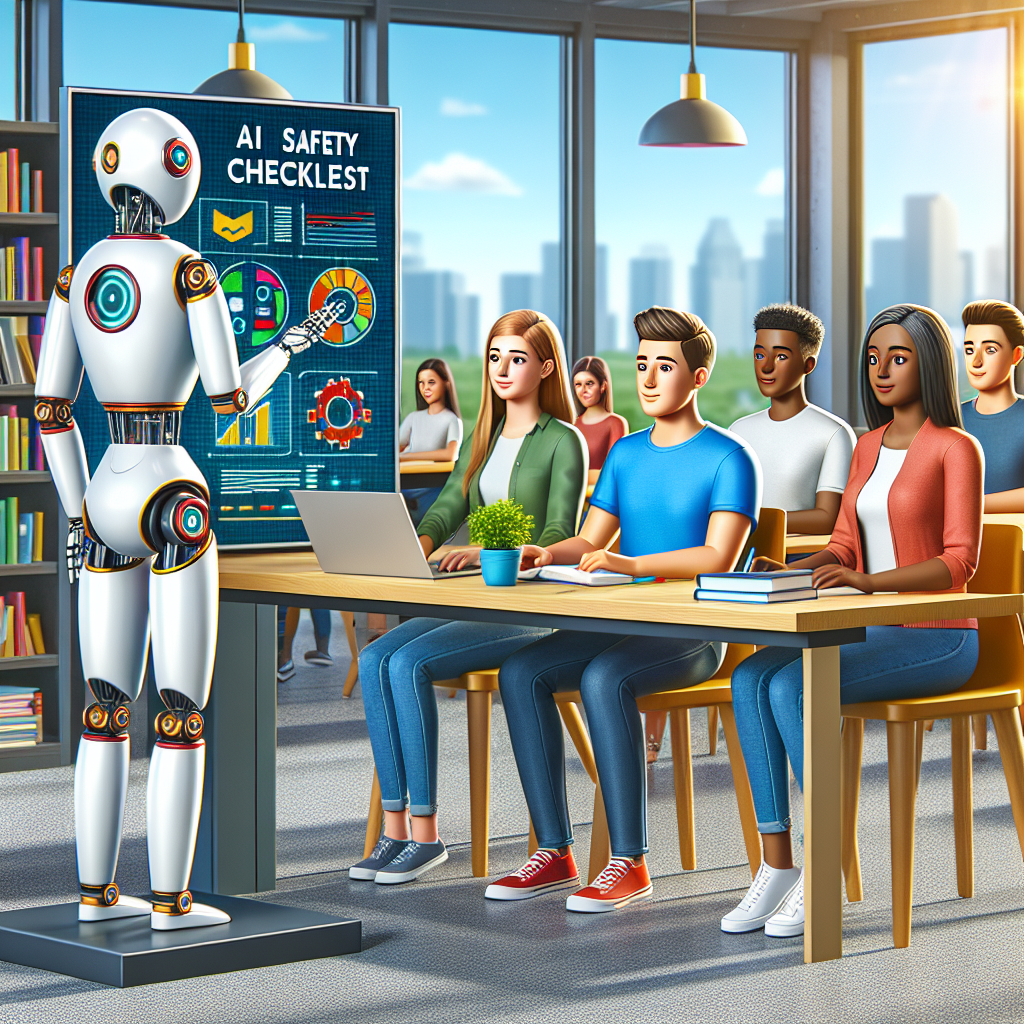
Understanding the AI Tutor Safety Checklist
An AI tutor safety checklist lists the practices or requirements meant to reduce risks children face when learning with AI companions or tutoring platforms. Most focus on parental controls, content filters, and privacy settings. However, new research shows these measures are often too narrow. They may not test real-world tutoring interactions, leaving critical gaps that standard checklists miss.
Common Gaps in Standard AI Tutor Safety Checklists
Recent investigations reveal that the usual checklists—those asking about profanity blocking, privacy policies, or visible moderation—rarely detect subtle and more harmful failures. Key gaps include:
- Inadequate crisis response: Some AI tutors ignore or mishandle discussions of self-harm, abuse, or suicide, with no referral to real help or escalation, as documented in the Australian eSafety report.
- Exposure to explicit or risky content: AI toy companions and tutors can generate or allow requests for inappropriate material, sometimes involving drugs or sexual topics, even with safety filters in place (Common Sense Media).
- Failure in multi-turn dialogue: Many AI tutors pass single-question tests but fail to maintain both educational integrity and safety over longer conversations (multi-turn dialogue), as shown in studies benchmarking pedagogical safety (SafeTutors research).
Critical Criteria for an AI Tutor Safety Checklist
| Checklist Area | What Standard Lists Cover | What Effective Checklists Add |
|---|---|---|
| Content Filtering | Profanity, violence, sexual content keywords | Testing for indirect, nuanced, or context-specific risks (e.g., drugs, self-harm, manipulation) |
| User Privacy | Data encryption, parental controls | Auditing actual data flows and exposure risks, including voice/text logs storage |
| Crisis Intervention | Generic chat moderation | Specific, real-time escalation for prompts about self-harm, abuse, or mental health concerns |
| Pedagogical Safety | Message appropriateness | Sustained accuracy and appropriateness across extended tutoring sessions |
| Testing Approach | One-off message checks | Scenario-based, multi-turn dialogue testing |
Why Checklists Miss Key Risks
Standard safety checklists often focus on obvious threats, such as visible bad language or superficial privacy warnings. However, AI tutors may only fail in specific, complex situations that a simple checklist won’t uncover.
- Short, scripted checks cannot replace situational testing—real children have nuanced needs and unpredictable situations.
- Many risks emerge only through sustained or evolving dialogue (multi-turn, prolonged conversations).
- Most checklists ignore whether the AI actually understands and appropriately responds to dangerous topics.
Illustrative Example: Improved AI Tutor Safety Checklist
Consider an educator who wants to evaluate an AI tutor for students aged 8–12. The goal: ensure both learning quality and safety. They begin with a typical checklist, then add evidence-based improvements based on expert guidance and safety failures known from research sources.
- Assumption: The AI tutor is used for daily homework help in a home setting.
- Checklist Comparison:
- Standard: Enabled parental controls, content filters, generic privacy settings.
- Improved: Simulate a multi-turn conversation including a child hinting at stress. Observe if the tutor provides appropriate academic help and directs the user to mental health resources.
- Test requests for help about personal problems, self-harm, or drugs. Log responses for escalation or failures, as failures in these areas have been well-documented.
- Check if inappropriate content can be revealed by using slang, euphemisms, or less direct prompts, as 27% of outputs in one test were inappropriate (Common Sense Media).
Result: By adding scenario-based tests missing from most checklists, the educator identifies gaps unseen in single-message or parental control checks alone.
Action Checklist: Building a Stronger AI Tutor Safety Checklist
- Go beyond generic safety labels—review recent reports for new and emerging tutor risks.
- Use multi-step, scenario-based dialogue during evaluation.
- Explicitly test for crisis topics (suicidal thoughts, abuse, drug use) and evaluate the AI’s referral response.
- Check for both accuracy and appropriateness in educational guidance over extended use, not one-off interactions (SafeTutors research).
- Regularly revisit and update your checklist as technologies and risks evolve.
What to Do If Your Checklist Fails
- If an AI tutor fails on multi-turn safety or escalation, pause its use and seek a tool with proven scenario-based safety testing.
- Stay informed through organizations like Common Sense Media or your national eSafety commissioner.
- Request transparent test results from vendors, not just promises of “child-safe” AI.
Where to Find More Guidance
- For more on correcting checklist use, see Why Most Parents Use AI Tutor Safety Checklist Wrong.
- For a review of avoidable checklist mistakes, visit 7 AI Tutor Safety Checklist Mistakes That Risk Learning.
- If you want to understand why some safeguards don’t work, check Why Most Safe AI Tutors for Kids Fail (And the Fix).
Next step: Adopt scenario-based, multi-turn safety checks and demand transparency from providers. The digital classroom is evolving—your safety checklist should, too.


Pingback: AI family education: A Practical Guide