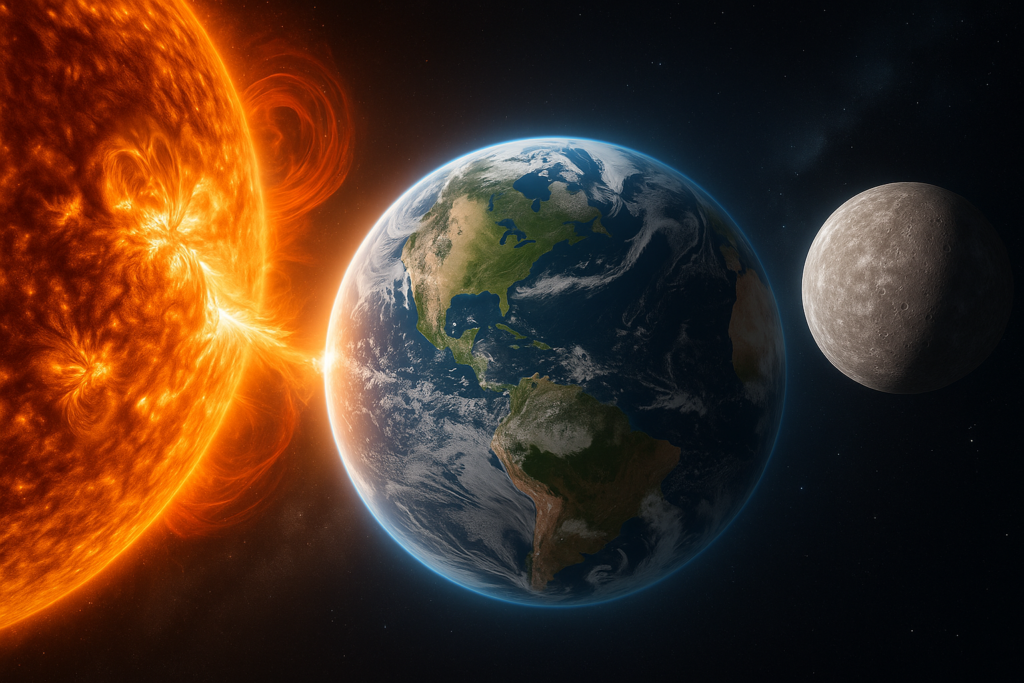
Solar vs Mercury events impact Earth very differently: solar events can disturb technology, climate, and the atmosphere, while Mercury events do not have any direct observable effect on our planet. Understanding this difference helps you prioritize real risks and respond appropriately to potential disruptions.
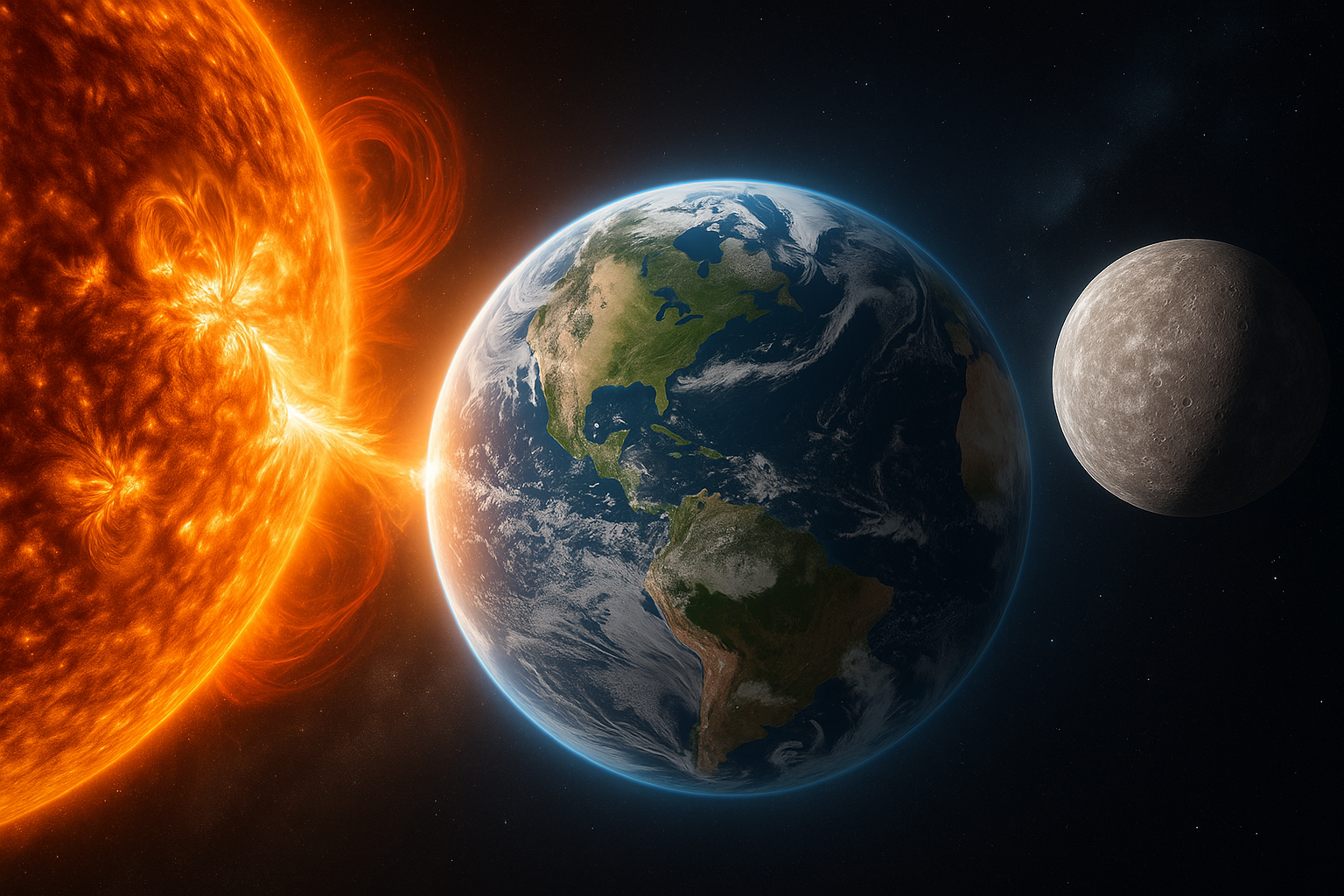
What Are Solar and Mercury Events?
Solar events include phenomena like solar flares, coronal mass ejections (CMEs), solar wind streams, and surges of solar energetic particles. These are regularly monitored because they can reach and influence Earth’s environment. In contrast, Mercury events refer to activity—such as solar wind interactions or magnetic disruptions—occurring on or near the planet Mercury. These are local to Mercury and have no direct path to affect Earth.
How Solar Events Impact Earth
When the Sun releases energy or charged particles, several noticeable effects can follow on Earth, especially when these events are directed toward our planet:
- Geomagnetic storms can disrupt power grids and navigation systems
- Satellite malfunctions and increased drag in low Earth orbit
- Radio communication blackouts, particularly at high latitudes
- Auroral displays, such as the Northern and Southern Lights
- Possible short-term climate anomalies through upper atmospheric changes
For more on direct mechanisms, see NASA’s overview of solar activity impacts on Earth and NOAA’s explanation of space weather effects.
Common Solar Events Affecting Earth
| Solar Event | Primary Impact | Preparation Steps |
|---|---|---|
| Solar Flare | Radio, GPS interference | Monitor NOAA alerts; backup navigation |
| Coronal Mass Ejection | Geomagnetic storm, grid risk | Power grid operators brace; satellites switch to safe mode |
| High-Speed Solar Wind | Auroras, mild disturbances | No major human risk; minor satellite reconfiguration |
| Solar Energetic Particle Event | Radiation hazard for high-altitude flights | Airlines reroute polar flights |
Mercury Events and Their Non-Impact on Earth
Events involving Mercury, such as its magnetic field disturbances or local aurora-like effects, don’t produce any measurable effect on Earth. Mercury’s small size, lack of a strong global magnetic field, and distance mean solar wind activity that influences Mercury is isolated from Earth. There is no scientific evidence, direct mechanism, or observed consequence that connects Mercury’s local phenomena to terrestrial changes.
Key reason: Energy and particles from events at Mercury disperse in space and are not transmitted to Earth due to vast distances and the absence of a linking channel.
Decision Point: Should You Worry?
Solar vs Mercury events present extremely different risk profiles:
- Solar activity: Requires real-time monitoring for power operators, satellite controllers, and specific groups such as polar airline routes and GPS users.
- Mercury activity: Poses no known risk or actionable concern for anyone on Earth.
If you use technology that can be affected by solar disturbances, such as GPS, shortwave radio, or satellite internet, stay informed through official space weather channels (such as NOAA Space Weather dashboards).
Checklist – Responding to Solar Events
- Monitor reliable space weather alerts (NOAA, NASA)
- Have a power backup plan for critical electrical systems
- Use alternative navigation if GPS may be disrupted
- Check with airlines if planning polar flights
- No preparation is needed for Mercury-specific activity
Long-Term Climate and Solar Activity
Chronic or intense solar activity, like clusters of powerful flares or high CME rates, has been linked to temporary climate variations — primarily through upper atmospheric heating and possible changes in atmospheric chemistry. Current research on this is ongoing, and while short-term anomalies have been observed, there is no consensus that solar events directly cause major climate shifts on human time scales. See this scientific review on solar flares and CMEs impact on climate for detailed analysis.
Illustrative example: Prioritizing Practical Risks
Scenario: Suppose you are a telecommunications manager preparing for both a predicted solar CME and news of a magnetic field disturbance on Mercury.
- Review NOAA solar activity alerts; scheduled CME arrival in 48 hours.
- Plan for potential radio/gps outages for several hours following CME.
- Notify the team to follow backup protocols for affected systems.
- Assess Mercury event: After researching, determine it has zero impact on local operations.
- Allocate all resources to solar event response; ignore Mercury event for Earth-side concerns.
This example demonstrates resource allocation based on actual risk, following current scientific evidence.
Where to Learn More and Stay Updated
- NOAA Space Weather Dashboard for forecasts and alerts
- NASA: Does All Solar Activity Impact Earth? for a plain-language breakdown
- Scientific research on solar climate impacts
Ready for more science-backed advice? Try our guide to the impact of connected technology on daily life or learn about the hidden costs of homeownership to prepare for additional real-world risks.