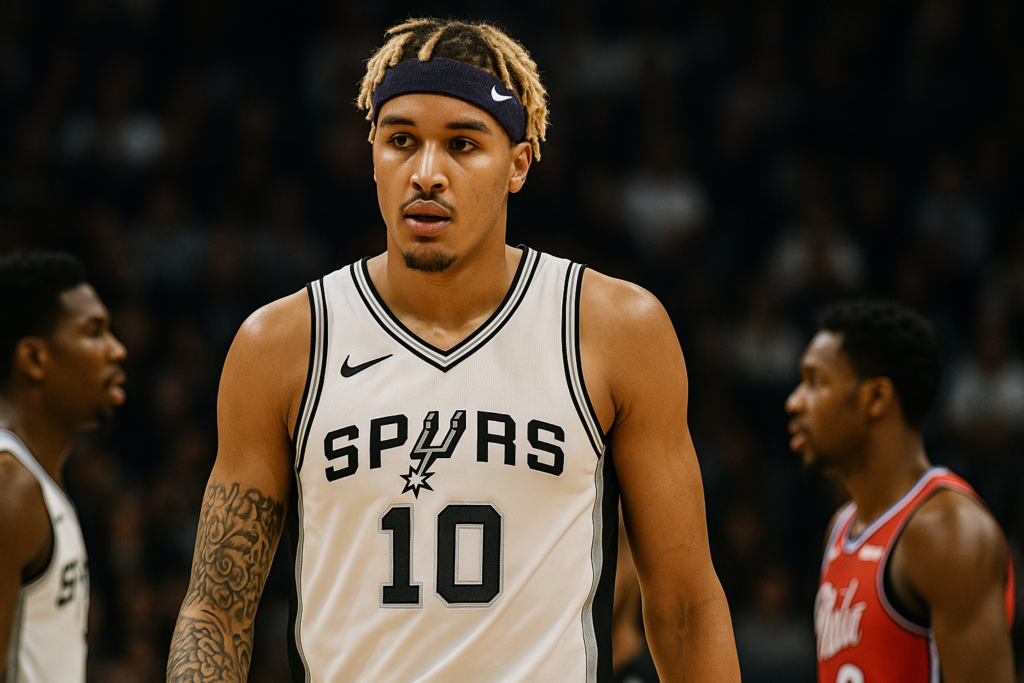
Jeremy Sochan’s NBA team impact is marked by adaptive leadership, emotional intelligence, and strategic playmaking. Examining his approach offers practical lessons for anyone interested in how one player can influence group dynamics and help teams excel both on and off the court.

How Jeremy Sochan Shapes NBA Team Dynamics
Sochan’s influence extends beyond physical play. He promotes unity, encourages communication, and models behavior that fosters resilience and adaptability. Let’s break down the main factors that define his contribution to NBA team culture.
1. Visible Leadership in a Young Roster
As Sochan matures in his NBA career, he increasingly assumes leadership roles. On the San Antonio Spurs, he stepped up after veteran departures, guiding teammates and creating a more inclusive environment. Sochan leads by example, displaying focus during training and vocal encouragement in games. His readiness to lead in a ‘different role’ has been noted by coaches and analysts, emphasizing both his maturity and the respect he earns from peers (SI.com).
2. Conflict Management and Emotional Poise
NBA games are high-pressure. Sochan’s emotional readiness became evident during an on-court confrontation with Lakers’ Jarred Vanderbilt. Instead of escalating the incident, Sochan maintained composure, downplayed the event, and prevented team distraction. This shows how emotional intelligence can maintain a cohesive locker room and keep focus where it belongs: on collective goals (ESPN.com).
3. Strategic Contributions: Off-Ball Movement
Sochan’s understanding of offensive flow is another key to his NBA team impact. His off-ball movement and timely cutting open up space for star teammates and create opportunities. This strategic subtlety—what analysts call “death by a thousand cuts”—forces defenses to react constantly, making Sochan a hidden engine for team offense (Pounding the Rock).
The Key Elements of Sochan’s Influence
| Aspect | Decision Criteria | Sochan’s Approach |
|---|---|---|
| Leadership Style | Team needs a role-model, peer support | Vocal encouragement, leads drills at practice |
| Handling Conflict | Risks of escalation, impact on morale | De-escalates, addresses privately, minimizes distraction |
| On-Court Strategy | Maximize overall offense, support star players | Times cuts, reads defense, finds open spaces |
| Communication | Player feedback, coach interaction | Asks questions, relays tactical messages |
How Teams Can Apply Sochan’s Lessons
- Cultivate young leaders: Encourage emerging players to support teammates vocally and lead by example, regardless of age or tenure.
- Focus on emotional management: Encourage conflict resolution without escalation to strengthen group trust and focus.
- Reward strategic awareness: Highlight the value of off-ball movement and positional play—even actions that do not directly result in scoring.
- Communicate openly: Create space for feedback and questions during practice and games.
Illustrative example: Adapting Sochan’s Methods in Practice
Assumptions: A youth basketball team lacks clear leadership and struggles with cohesive play. The coach introduces Sochan-inspired techniques:
- Designates a peer captain to lead warmups and encourage teammates during drills.
- When conflicts arise (say, an argument during practice), the designated leader speaks privately to the disputants before coaches intervene.
- Drills prioritize off-ball cutting, rewarding movements that lead to opportunities for others, not just individual stats.
- Players are asked after games to describe one teammate’s positive contribution—reinforcing open communication.
Using these elements, the coach can foster leadership, conflict management, strategic play, and improved communication—paralleling Sochan’s effect on his NBA team.
Limitations and Considerations
While Sochan’s approach has shown promise, not all strategies are transferable to every team or level. Leadership styles must fit group culture. Conflict management depends on trust and existing relationships. Strategic off-ball play may need adaptation to suit different levels of experience or skill.
Checklist: Does Your Team Reflect Sochan’s Core Methods?
- Are emerging players encouraged to lead by example?
- Does the team approach conflicts calmly and resolve them quickly?
- Is there a focus on strategic, selfless movement—not just individual stats?
- Do players and coaches regularly communicate and provide constructive feedback?
Where to Learn More
- For deeper analysis of NBA team dynamics, see SI.com: Sochan’s leadership.
- Examples of Sochan’s conflict resolution are covered at ESPN.
- For technical breakdowns on movement and strategy, visit Pounding the Rock.
Next step: Coaches and team leaders can audit current team culture using the above checklist, then model their adaptations on Sochan’s most effective habits for sustainable progress.