AI technology in elderly care offers powerful ways to ease the burden on caregivers, enhance seniors’ well-being, and address rising challenges in an aging society. By blending smart devices, data analytics, and personalized support, families can improve monitoring, social interaction, and independence for older adults—all while reducing stress and errors.
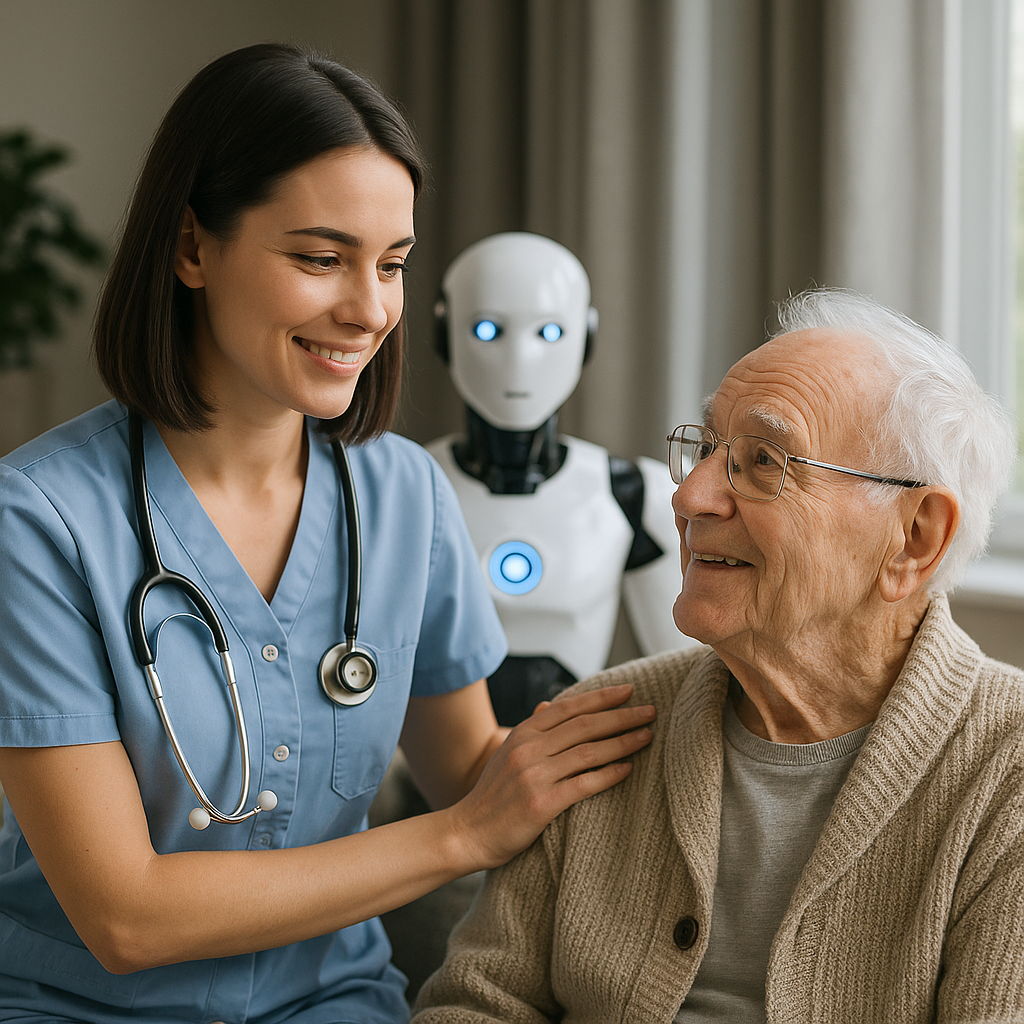
Understanding AI Technology in Elderly Care
AI encompasses tools and systems that simulate human intelligence—learning from data, identifying patterns, and making autonomous decisions. In elderly care, AI-powered solutions serve five main roles: rehabilitation support, emotional companionship, social facilitation, supervision, and cognitive stimulation (sciencedirect.com: Scoping review).
- Wearable health devices flag anomalies in heart rate or movement.
- AI chatbots provide conversation and reduce loneliness.
- Smart pill dispensers help ensure medication is taken correctly.
- Robotic assistants can help with basic daily tasks or encourage mobility exercises.
AI’s aim in this sector is not to replace caregivers, but to augment their ability to deliver safer and more personalized care (GAO: AI in Health Care).
Core Challenges AI Can Address
Traditional solutions often struggle to adapt to changing, individual needs. The result can be caregiver burnout, missed medications, or delayed emergency response. AI technology, if applied thoughtfully, helps overcome these barriers by:
- Enabling real-time monitoring for rapid intervention
- Providing reminders and adaptive prompts
- Offering companionship to counteract isolation
- Delivering data for personalized care decisions
However, it is crucial to match technology to the individual’s real requirements and maintain robust human involvement.
Checklist: Setting Up AI in Elderly Care
| Step | Consideration | Why It Matters |
|---|---|---|
| Assess Needs | Physical, cognitive, emotional, social | Tailors technology to unique situations |
| Research Technology | Proven AI tools matching needs | Limits wasted spend and frustration |
| Train Users | Family and care staff; simple guides | Reduces errors and builds confidence |
| Monitor & Adjust | Collect feedback; adapt as needed | Ensures continued effectiveness |
| Secure Data | Privacy, passwords, permissions | Maintains trust and regulatory compliance |
Steps to Implement AI Technology in Elderly Care
- Audit Existing Setup: List the current care routines, devices, and outstanding challenges. Consult the elderly individual’s preferences and any professional caregivers.
- Identify Gaps: Do issues involve medication adherence, fall risk, loneliness, or emergency alerting?
- Select AI Tools: Investigate solutions (e.g., smart pillboxes, voice assistants, wearables) reviewed for ease of use and reliability (sciencedirect.com: Digital transformation in elderly healthcare).
- Train All Users: Schedule short, practical training for caregivers and seniors. Focus on daily usage, troubleshooting, and interpreting alerts.
- Pilot and Tune: Begin with one technology at a time. Monitor for false alarms, overcomplicated functions, or neglect of user comfort. Encourage feedback.
- Guard Data Privacy: Use secure passwords, only share data with trusted providers, and check each tool’s privacy policy.
- Review Regularly: At set intervals, evaluate the system’s impact. Is health being monitored more accurately? Are caregivers less stressed? Make incremental improvements.
Illustrative Example: Choosing and Using a Smart Pill Dispenser
Scenario: A family caregiver wants to address her father’s missed doses due to memory challenges. She currently tracks medicine by hand but finds it unreliable and asks her siblings for help, leading to confusion and overlap.
- Needs Assessment: Daily medication, slight confusion, independent living valued.
- Technology: She researches and selects an AI-enabled pill dispenser with reminders and dose logging.
- Training: Caregivers and her father attend a simple hands-on tutorial (including how to acknowledge reminders, refill, and call for help if confused).
- Outcome Monitoring: For a month, she compares the proportion of correct doses before and after, checking the device’s logs and asking her father about ease of use.
Result: The logs show improved adherence. Occasional missed doses prompt a follow-up training session, and the system is adjusted for louder reminders. The family decides to extend the technology to other tasks after confirming privacy settings.
Common Pitfalls and How to Avoid Them
- Over-reliance: Don’t assume AI replaces all human care. Balance technology with regular interaction.
- Neglecting Data Security: Ensure personal information is protected; weak security can cause distrust and risk.
- Skipping Training: Inadequate training can lead to mistakes or rejection of helpful tools.
- Ignoring Regular Updates: AI systems can become obsolete or less accurate; periodic evaluations are essential (GAO: AI in Health Care).
When Is AI a Good Fit for Elderly Care?
- Best Fit: Seniors living alone, needing scheduled medicines, or whose families live far away benefit from AI solutions that supplement monitoring and motivate interaction.
- Poor Fit: Complex tools can overwhelm users with severe memory or sensory impairments without robust support and supervision.
What to Watch Next
Major progress is happening in remote health tracking and predictive analytics. Research is ongoing on AI’s ability to tailor rehabilitation exercises and offer emotional support for those with cognitive decline (sciencedirect.com: Scoping review).
To understand broader digital transformation trends impacting healthcare, you may also find value in the role of AI in crisis management or AI’s impact on surgical procedures.
Summary Table: AI Solutions Matched to Common Elderly Needs
| Challenge | AI Solution | Notes |
|---|---|---|
| Missed medications | Smart pill dispenser | Requires user comfort with device |
| Loneliness | AI chatbot/robot companion | Not a replacement for family but adds support |
| Fall risk | Wearable with fall detection | Set correct sensitivity to reduce false alarms |
| Emergency alerts | Smart home monitoring | Ensure clear response protocols |
Next step: Begin with a needs audit and shortlist solutions that match your situation. Consult professional advisers, and prioritize ongoing training and security as you bring AI into your care plan.
Sources and further reading
- Artificial intelligence in elderly healthcare: A scoping review – ScienceDirect
- Artificial Intelligence in Health Care: Benefits and Challenges of Technologies to Augment Patient Care | U.S. GAO
- Artificial intelligence-enabled digital transformation in elderly healthcare field: Scoping review – ScienceDirect