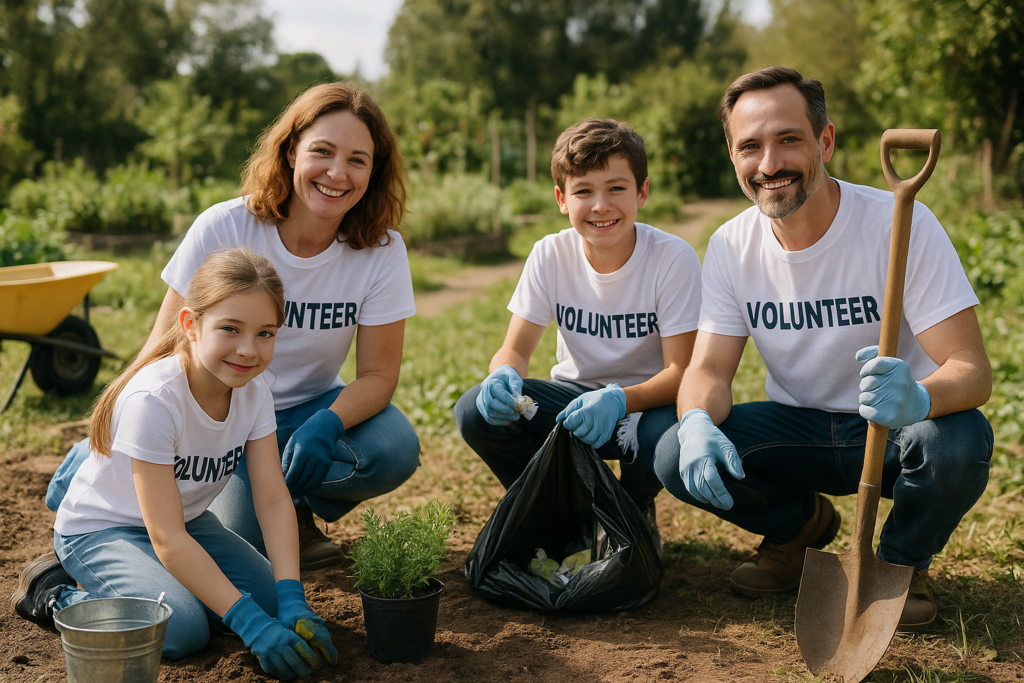
Family volunteer opportunities create a meaningful way for families to bond, give back, and develop important skills together. The right approach makes it easier for different ages to participate, fosters teamwork, and offers rewarding experiences that match your schedule and interests.

Understanding Family Volunteer Opportunities
Family volunteering typically involves any combination of relatives—parents and children, grandparents, siblings, or couples—participating together in unpaid, charitable activities. Organizations increasingly recognize families as valuable contributors and are designing specific schemes to encourage joint involvement. Common types of family volunteering include community clean-ups, intergenerational projects, and even scientific research at home. NCVO: Volunteering – A Family Affair?
Benefits and Challenges of Family Volunteering
- Benefits: Strengthens family bonds, teaches children social responsibility, introduces new skills, and makes volunteering enjoyable for all ages.
- Challenges: Activities may not suit every age group or interest; organizations may have age restrictions or require safety training; scheduling can be tricky.
Organizations that create flexible, inclusive opportunities and are willing to adjust for families help overcome some of these barriers. NCVO: Families and Volunteering Framework
How to Find the Right Family Volunteer Opportunity
- Discuss family interests and skills. What issues or causes matter to everyone? List activities that excite each person.
- Decide on your available times. Are you looking for ongoing roles, a single event, at-home projects, or occasional support?
- Search for family-friendly opportunities. Use trusted databases, local community boards, or ask organizations directly about family-inclusive roles.
- Check requirements and suitability. Review age limits, physical demands, and expectations before committing.
- Pilot a short-term project. Try a day or digital project first to see what works for your family.
Checklist: Choosing a Family Volunteer Project
| Question | Details |
|---|---|
| Are all ages welcome? | Look for activities labeled as family or all-ages. Check for minimum age, supervision rules. |
| Is it safe and accessible? | Review physical requirements, skill needs, and whether it fits family members’ abilities. |
| Is the schedule flexible? | Find projects compatible with school/work schedules or holidays. |
| Does it match family interests? | Connect with organizations aligned to your causes or hobbies (art, outdoors, science). |
| Can you try before committing? | Pilot with a one-off event (like a park clean-up or citizen science weekend). |
Types of Family Volunteer Opportunities
- In-person projects: Park clean-ups, tree planting, food bank sorting, charity walks.
- Intergenerational programs: Visits to care homes or community arts and crafts events involving all ages.
- Remote or digital volunteering: Transcribing documents for museums, participating in citizen science like bird counts, or entering data together online. GSA: Citizen Science and Crowdsourcing
Citizen Science: A Flexible Family Choice
Citizen science projects invite families to join real scientific research, often from home or during outdoor activities. You can collect rainfall data, observe local wildlife, or analyze images online. Options are often accessible, require little prior knowledge, and provide visible contributions to wider research. Always review family suitability and age recommendations for each specific project.
Practical Steps for Getting Started
Follow these steps to launch your family volunteering journey:
- Start the conversation: Gather your family and discuss what matters to everyone. Make a wish list of causes or skills you’d like to support.
- Research together: Look at local volunteer centers, community groups, or trusted websites. Reach out to ask if they can accommodate families.
- Read the details: Carefully check age rules, time commitments, locations, and any necessary training or background checks.
- Pilot an activity: Try a short-term or one-off event to see what your family enjoys. Adjust based on feedback after your experience.
- Reflect and continue: After your first project, discuss as a family what worked—and what you’d like to do next. Adjust your approach if needed.
Illustrative Example: Selecting a Family Volunteer Project
Assumptions: A family of four (two adults, two children aged 8 and 13) wants to volunteer together on weekends and likes nature and science.
- They discuss their shared interest in the environment and science-based activities.
- Time available: one afternoon every other weekend.
- They search citizen science project platforms for suitable opportunities.
- They find a bird-counting project open to all ages and a weekend group for tree planting that welcomes families with children over 7 years old.
- They check the requirements: both projects are physically accessible, require no experience, and have a flexible schedule.
- They try both—one month with the bird count, then a single tree-planting event, and keep what everyone enjoys most.
Tips for Success
- Stay flexible. Be open to trying different roles or formats.
- Communicate with the volunteer organizer about your family’s needs or limitations.
- Celebrate your achievements. Even small contributions make a difference!
- Balance volunteering with other commitments—avoid burnout by not overcommitting.
Where to Look for Family Volunteer Opportunities
Try these approaches for finding opportunities:
- Contact local volunteer centers and ask specifically about family-friendly roles.
- Browse online volunteer databases, filtering by age and group requirements.
- Explore citizen science projects for flexible, at-home or outdoor options.
- Inquire at community organizations, places of worship, or schools for seasonal family projects.
To build community and skills together, families should prioritize open communication, reasonable commitment levels, and projects that inspire everyone to participate.
Next Steps
Gather your family to list favorite causes, then review trusted project directories to compare their requirements together. For creative ways to bond as a family, see our articles on creative family bonding activities or cultivating creativity in family life.