
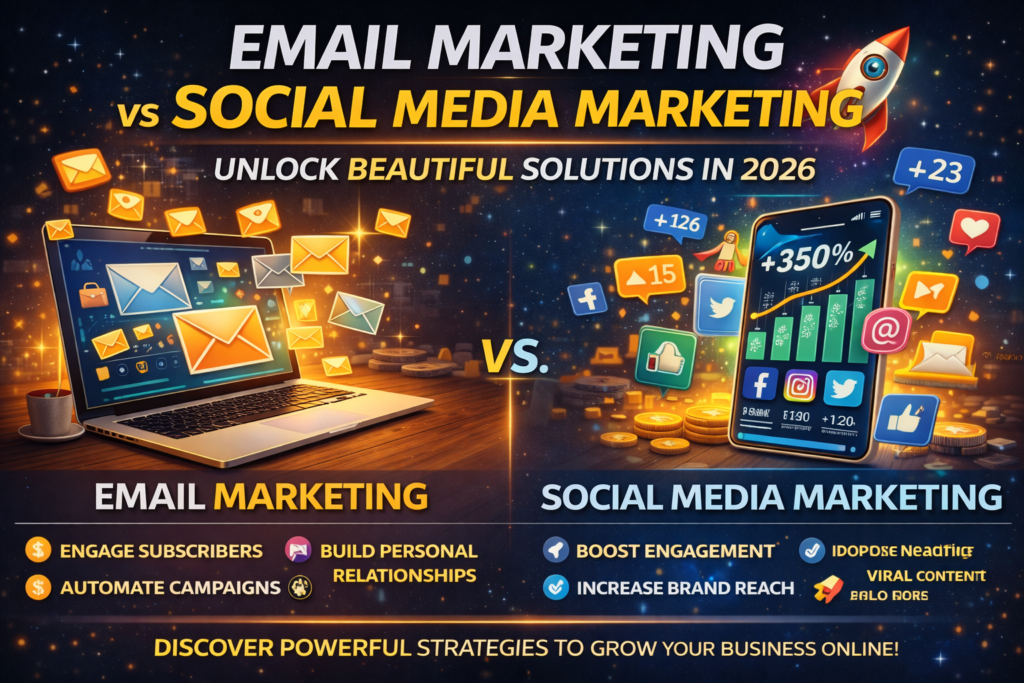
Email Marketing vs Social Media Marketing: Unlock Higher Conversions in 2026!
In today’s fast-paced digital landscape, marketers frequently face a crucial question: email marketing vs social media marketing—which channel truly drives superior conversions? Understanding how to leverage both strategies effectively can significantly elevate your business. This comprehensive guide dives into the nuances of each channel, highlighting their strengths, weaknesses, and real-world applications to maximize your marketing performance in 2026.
The Core Difference: Email vs Social Media
Before we explore the comparisons further, it’s essential to grasp what distinguishes these two powerful channels:
- Email Marketing: A direct communication method enabling personalized outreach to subscribers about your offerings, promotions, and updates.
- Social Media Marketing: Engages audiences on platforms such as Facebook, Instagram, and Twitter, utilizing eye-catching posts to create buzz and encourage sharing.
Email Marketing: The Proven Performer
Even in 2023, email marketing stands tall as a powerhouse for conversion rates. Here are key reasons to prioritize it in your strategy:
1. Direct Access to Actionable Insights
Tools like Mailchimp and Constant Contact offer in-depth analytics. By tracking metrics such as open rates, click-through rates (CTR), and conversion rates, marketers can make data-driven adjustments at each campaign stage to enhance effectiveness.
2. Personalization at Scale
Thanks to advanced segmentation, businesses can tailor messages to specific audience segments. Personalization increases engagement and conversion rates. Conducting A/B tests on subject lines or send times can reveal powerful insights, allowing you to refine your approach continuously.
3. Greater Control Over Customer Experience
Unlike social media channels where algorithms dictate visibility, emails land directly in subscribers’ inboxes, ensuring your message reaches the intended audience without barriers.
Social Media Marketing: The Trendsetter
While email is a well-documented conversion powerhouse, social media also offers significant advantages. Here are compelling reasons to integrate it into your strategy:
1. Visual Engagement
With eye-catching videos and graphics, social media marketing promotes creativity, resulting in often higher engagement rates than email campaigns. High-quality visuals, infographics, and brief videos can captivate and convert your audience effectively.
2. Community Building
Social media platforms foster community engagement, enhancing brand loyalty and customer lifetime value. Interactive polls, Q&A sessions, and live videos can significantly boost connection and engagement. By utilizing these strategies, brands can better align with sustainable living trends.
3. Immediate Feedback and Viral Potential
Social media facilitates real-time feedback, empowering businesses to adapt their strategies on the fly. Moreover, the viral nature of social content can extend your reach far beyond direct followers, amplifying brand visibility.
The Hard Numbers: Comparing Effectiveness
Here’s a detailed comparison based on recent data from 2023:
| Metric | Email Marketing | Social Media Marketing |
|---|---|---|
| Average Open Rate | 21.33% | N/A |
| Average CTR | 2.62% | 0.5-1.5% |
| Conversion Rate | 1.5-5% | 0.5-1% |
Common Mistakes to Avoid in Both Strategies
Regardless of your focus, here are critical pitfalls to watch for:
- Neglecting Analytics: Failing to analyze performance metrics can lead to missed opportunities for improvement. Regularly review analytics to drive your strategy.
- Ignoring Audience Tone: Ensure your messaging aligns with your audience’s expectations; tone-deaf messaging can alienate your followers.
- Generic Content: Personalization is crucial; employing a one-size-fits-all approach can weaken your efforts significantly.
- Inconsistent Posting Schedules: Consistency builds trust. Strive to engage regularly across all platforms to keep your audience informed and interested.
What Works Best for Conversions?
The effectiveness of email marketing vs social media marketing largely depends on your specific goals and target audience. When it comes to cold, hard conversions, email typically takes the lead. Its personalized touch and ability to segment communication based on user behavior often make it more effective for final conversions.
Case Study: E-commerce Success
Consider an e-commerce store that strategically combines both methods:
- Remarkable email campaigns announcing flash sales can achieve conversion rates as high as 20%.
- Social media ads promoting the same flash sales may yield merely a 3% conversion rate.
This case illustrates that while social media excels at building brand awareness, emails often play a pivotal role in clinching the sale.
Final Thoughts on Email Marketing vs Social Media
In conclusion, both email marketing and social media marketing possess unique strengths and weaknesses. Understanding your specific goals and target audience is crucial for determining which channel to prioritize. While email continues to lead in direct conversions, leveraging social media for engagement is essential for a well-rounded marketing strategy. By integrating both approaches, you can craft a comprehensive marketing plan that maximizes conversion potential and drives sustainable growth.
Frequently Asked Questions about Email Marketing vs Social Media Marketing
1. Which is better for conversions in 2023?
Email marketing continues to be more effective for direct conversions, given its personalized nature.
2. Can I use both strategies together?
Absolutely! A cohesive marketing strategy that blends both methods usually yields the best outcomes.
3. How often should I send marketing emails?
Aim for a consistent schedule—weekly, bi-weekly, or monthly—tailored to your audience’s preferences for maximum impact.
4. What type of content works best on social media?
Engaging visuals, interactive stories, giveaways, and user-generated content resonate strongly with social media audiences. Craft content that invites interaction and fosters community.