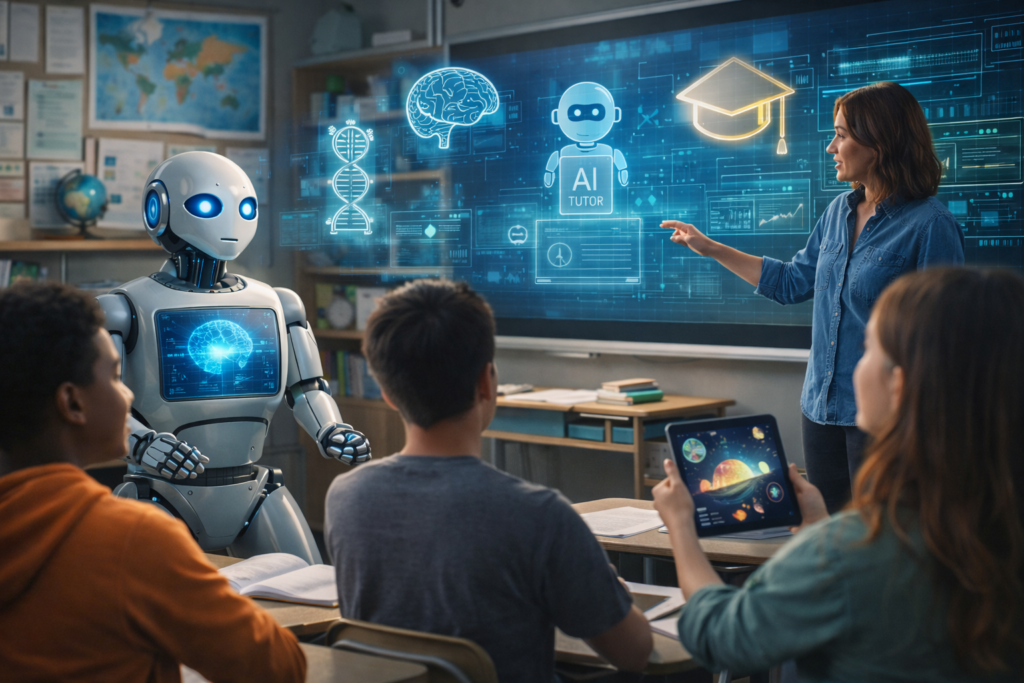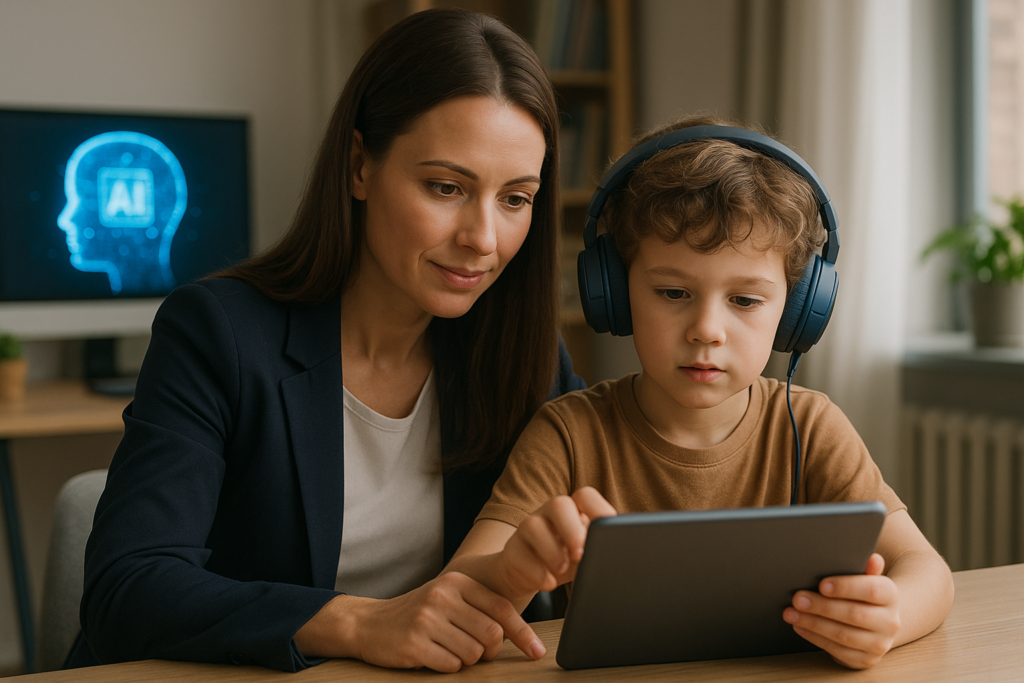
AI innovations for child education are rapidly changing the classroom, offering new ways to personalize learning, automate feedback, and engage students through adaptive technologies. Parents and educators should understand what tools are available, how they work, benefits versus limitations, and what to consider when integrating AI into children’s educational journeys.

What Are AI Innovations for Child Education?
AI (Artificial Intelligence) in child education refers to technologies that use data-driven algorithms to recognize learning patterns, adapt content, and provide tailored support. Examples include smart tutors, adaptive quizzes, learning analytics, and teacher-support tools. These tools support educational goals by automating repetitive tasks and offering insights to teachers and students (U.S. Department of Education).
Major Benefits of AI in Child Learning
- Personalized Learning: Students receive customized resources, feedback, and pacing.
- Automated Assessment: Quick feedback helps address learning gaps sooner.
- Engagement: Interactive AI tools often use gamification to keep kids interested (MDPI quasi-experimental study).
- Support for Teachers: Educators can focus more on teaching rather than grading or administrative work.
Common Types of AI Tools Used in Child Education
| Tool Type | Typical Uses | Key Considerations |
|---|---|---|
| Adaptive Learning Platforms | Personalized lessons, automatic topic progression | Check for curriculum alignment and data privacy |
| Smart Tutors | Individualized skill practice, instant feedback | Monitor reliance on the tool |
| AI-Driven Analytics | Track student progress, identify difficulties | Ensure accurate interpretation of reports |
| Content Generation Tools | Create quizzes, lesson summaries | Review for age-appropriateness and accuracy |
Key Challenges and Limitations
Despite their promise, AI tools in education come with notable challenges:
- Equity: Not all students or schools have equal access to reliable technology.
- Bias: AI algorithms can unintentionally reflect or amplify existing biases in educational content or assessment (U.S. Department of Education).
- Over-Reliance: Students may become dependent on AI help rather than developing independent skills.
- Data Privacy: Personal educational data must be collected, stored, and used responsibly.
Evaluating an AI Tool for Your Child or Classroom
Before adopting an AI tool, consider:
- Objective: Does the tool match learning or teaching goals?
- Transparency: Can you understand how the AI makes decisions?
- Data Handling: Are privacy practices clearly described?
- Cultural Relevance: Is the content appropriate and inclusive?
- Flexibility: Can teachers and parents adjust settings and control pacing?
Checklist: Safe Adoption of AI Tools in Child Education
| Consideration | Action Step |
|---|---|
| Privacy Policy | Read and understand the policy before use |
| Teacher/Parent Involvement | Prioritize models that keep adults in the loop |
| Curriculum Fit | Check for alignment with learning standards |
| Accessibility | Ensure compatibility with devices and student needs |
| Monitoring | Set routines for regular review and feedback |
Illustrative Example: Selecting an AI Maths Tutor
Assumptions: A primary-grade teacher wishes to use an AI-powered math tutoring platform with her class, focusing on multiplication.
- Identify objective: Raise multiplication proficiency in students.
- Tool review: Compare two popular AI maths tools for alignment with curriculum, data privacy statements, and cost.
- Trial period: Pilot both tools with a small group for two weeks, observing student engagement and ease of use.
- Review feedback: Collect input from students and other teachers.
- Make a decision: Choose the tool that best fits objectives, privacy requirements, and observed engagement (Springer K-12 AI scoping review).
Best Practice: Human Guidance Remains Essential
All sources emphasize that while AI learning tools offer benefits, adult guidance is critical to ensure child safety, promote deep understanding, and foster social-emotional development (U.S. Department of Education). AI should supplement, not replace, personal attention.
Limitations and Uncertainties
AI tools differ in quality. Research primarily covers pilot studies and early implementations, so long-term impacts are still uncertain. Not every tool currently available has been independently reviewed or proven across diverse populations (MDPI study). Stay informed, and continuously assess both benefits and challenges as technologies evolve.
More Practical Reading
- How to Choose AI Tools for Kids Education: A Practical Guide
- AI strategies for enhancing family education: practical playbook
For your next step, review privacy policies and demo features of potential AI educational tools side-by-side before adoption, ensuring you weigh both their offerings and limitations.