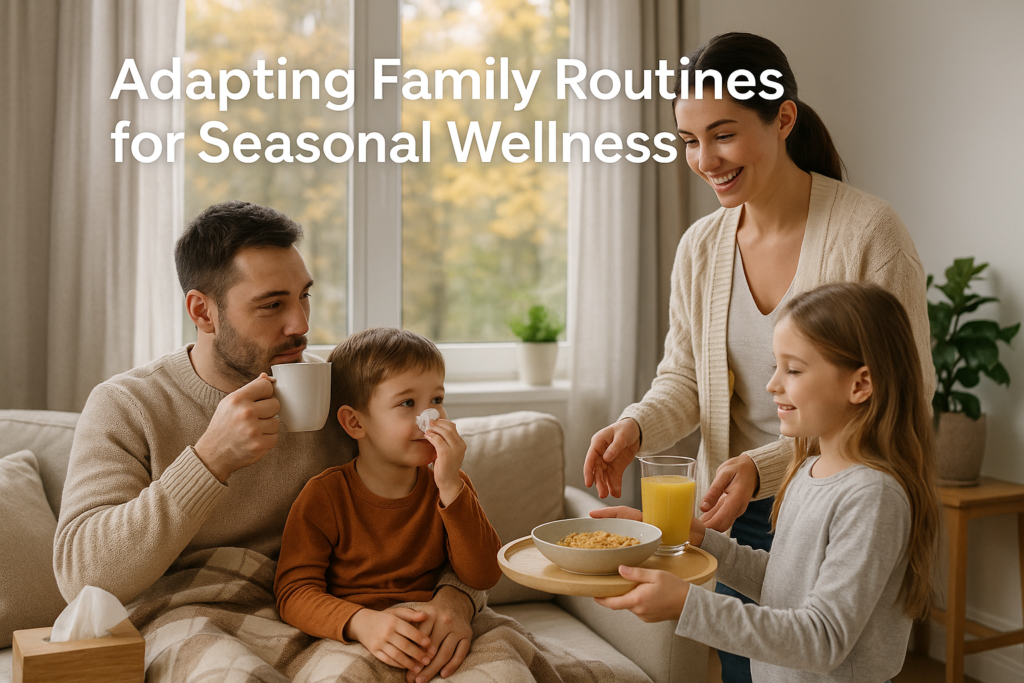
Seasonal changes can challenge family routines, but simple evidence-based adjustments help maintain wellness all year. By aligning daily habits with each season’s demands, families can improve eating, activity, and rest patterns, supporting everyone’s well-being. This guide explains proven seasonal wellness routines and how to adapt them at home.
Why Adapt Routines for Seasonal Wellness?
Seasons affect daylight, temperature, daily schedules, and common illnesses. Adjusting routines helps families stay active and healthy despite outside changes. For example, winter may limit outdoor play, while summer often brings more fresh produce and opportunities for physical activity. Adapting routines lets families make the most of each season’s advantages and tackle its unique challenges.
Core Elements of Seasonal Wellness Routines
Research highlights four daily routine pillars:
- Mealtime – Consistent, balanced meals support immunity and mood year-round.
- Playtime/Physical Activity – Movement boosts health regardless of weather.
- Bedtime – Restful sleep is vital during all seasons, with adjustments for changing daylight.
- Chore Time – Shared upkeep builds responsibility and family bonds.”Four Basic Routines for Children’s Well-being
Families who commit to these pillars—and tweak them for each season—support healthy habits that last.
Concrete Steps for Each Season
| Season | Routine Adjustments |
|---|---|
| Spring |
|
| Summer |
|
| Fall |
|
| Winter |
|
Checklist: Adapting Routines for Your Family
- Review your current routines each season.
- Set 1-2 new realistic family goals per season (try a new vegetable, schedule a nightly walk).
- Get input from all family members for buy-in.
- Use a routine checklist or contract to track progress. Downloadable templates are available from the Healthy Homes/Healthy Families program.
- Be flexible. Adjust based on what’s working and your family’s changing needs.
Meal Planning for the Seasons
Eating with the seasons maximizes nutrient intake, flavor, and variety. The We Can! Energize Our Families: A Family Guide offers meal planning tools and healthy grocery lists that you can adapt each season. Sample approaches include:
- Spring/Summer: Salads, grilled vegetables, fruit snacks
- Fall/Winter: Roasted vegetables, soups, stews, whole grain sides
Review available produce at your local market each week. Involve kids in choosing and preparing seasonal ingredients.
Supporting Physical Activity Year-Round
All seasons require movement, but activities may need to shift inside or outside. For gloomy or cold days, consider:
- Setting up indoor obstacle courses or fitness circuits
- Trying online family-friendly exercise videos
- Scheduling active chores: cleaning, organizing, or dancing together
In warmer seasons, plan regular outdoor walks, play in parks, or bike rides. Track activity with printable logs from the We Can! guide.
Bedtime Routine Adjustments
Sunrise and sunset affect natural sleep cycles. To maintain good rest:
- Gradually adjust bedtimes before daylight saving changes or school terms
- Keep bedrooms calm and dark at night, even in summer
- Use wind-down routines (bath, story time, quiet talk) year-round
Worked Example: Mapping a Winter Wellness Routine
Illustrative example (Assumptions: Family of four, children ages 7 and 11, moderate winter climate):
- Mealtime: Plan weekly menu of three quick soups, two baked chicken dishes, focus on in-season root vegetables. Involve kids in peeling and prepping vegetables.
- Physical activity: Alternate indoor dance videos with short neighborhood walks after school. Use a printed activity log to record minutes moved each day.
- Bedtime: Begin night routine at 8:00 pm: lights lower, electronics off, quiet story or chat. Reward consistent routines with Saturday movie night.
- Chores: Assign daily quick chores (dishes, laundry sort, feeding pet) right after dinner and track with a checklist.
The family reviews routines together at week’s end, discussing successes and any needed tweaks.
Tips for Long-Term Success
- Start small: Focus on one seasonal change at a time.
- Document goals or agreements using family contracts (see Healthy Homes/Healthy Families).
- Celebrate effort, not perfection.
- Regularly revisit routines every equinox or change in family schedule.
Resources for Further Support
- We Can! Energize Our Families: A Family Guide
- Healthy Homes/Healthy Families Program
- Four Basic Routines for Children’s Well-being
- Related Clear Guide Hub articles:
Next step: Choose one routine (mealtime, playtime, bedtime, or chores) and set a family goal for the upcoming season using the templates linked above. Review together at the week’s end and adjust for what works best in your home.