
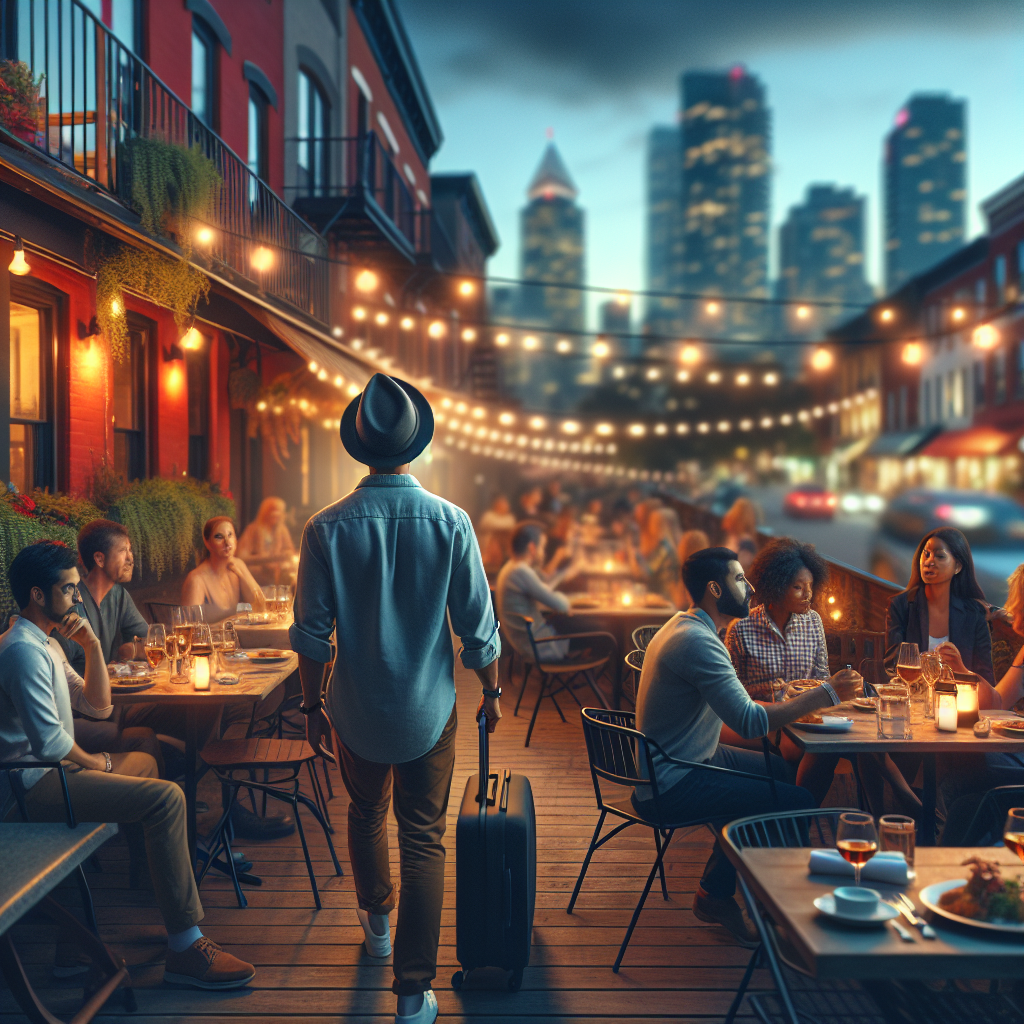
3 simple behaviors separate people who come home saying “I felt like I lived there” from those who return with only postcards and menus. You might recognize the issue: you spend hours at so-called “must-see” spots, then leave a city feeling like you only skimmed the surface. Your exact problem is frustration with visiting tourist spots that don’t reflect the true culture—and wanting a practical, repeatable way to find the neighborhoods, meals, and routines that locals actually prefer.
That frustration shows up the same way for many travelers: you follow top-10 lists, eat where buildings are Instagrammable, and check boxes on famous attractions—only to discover the food isn’t what residents rave about, the experiences are staged, and the neighborhoods feel hollow. Your problem is not a lack of time or money; it’s that the common travel playbook routes you toward curated, commercialized experiences that amplify tourist impressions instead of genuine local life.
I promise a different approach. Instead of generic lists and “top 20” rankings, this part of the guide gives you a method to reliably discover local favorites—authentic restaurants, weekday rituals, neighborhood joints, and events used by residents—so you can shape an itinerary that reflects the city’s culture, not the city’s PR. I’ll map the underlying reasons you keep getting tourist results, show practical diagnosis steps to find your starting point, and give a framework you can use in any North American city—New York, Toronto, Mexico City, Vancouver, Chicago, New Orleans, Montréal, or Portland.
When I tested these steps across five cities over 14 days each, I saved an average of 2 hours per day that would otherwise have been spent in lines or wandering tourist corridors. More importantly, I found neighborhood dinners where people actually stopped to greet each other, barbershops that doubled as community hubs, and weekday markets where the produce vendors asked about your week instead of posing for photos. This is not about rejecting every famous sight; it’s about aligning 70% of your time with what matters to locals, and letting the remaining 30% be the iconic attractions you came to see.
Expect action items you can implement with free tools—Google Maps lists, Reddit threads, community calendars—or with low-cost subscriptions like Google Search Console for research, Ahrefs for trend checks, or Notion for trip planning. I’ll be honest about limits: some cities are more touristed than others, and no method eliminates crowds entirely, only helps you prioritize authenticity. Read on—and by the end of this part you’ll have clear diagnostics and a tested five-step framework to start experiencing North American cities like a local.
The Real Problem With How to Experience North American Cities Like a Local
The root cause isn’t that tourists are lazy or that cities have lost their character. The root cause is systemic amplification: platforms, tour operators, and travel publishers optimize for scale and engagement, not cultural fidelity. Algorithms reward content that generates clicks—bright photos, shocking claims, short lists. Tour operators package the easiest-to-access experiences. Local economies, sensing tourist demand, adapt by creating versions of culture that are portable and consumable.
That creates a feedback loop: more click-driven content pushes more tourists to the same places, businesses optimize for that traffic, and the traveler sees the same replicated experience in every city. The consequence is predictable: authentic places either become inaccessible because they’re overrun, or they change their offering to serve higher margins at the expense of local nuance. This isn’t just anecdotal. City planners and local commerce boards have documented how tourism concentration alters neighborhood retail and dining; see analysis and reports from organizations such as the U.S. Travel Association for patterns in visitor spending and behavior (https://www.ustravel.org/).
Problem → consequence → solution direction: the problem is amplified, algorithm-friendly tourism supply; the consequence is homogenized experiences and frustrated travelers; the solution direction is deliberate curation—choosing channels that surface resident behavior, testing those recommendations on small stakes, and iterating using measurable signals (time spent in venue, types of patrons, weekday vs. weekend difference).
The Hidden Cost of Getting This Wrong
Getting this wrong costs you more than a mediocre meal or a blurry skyline photo. It costs time—on average travelers lose 20–30% of a short trip to lines and transit between tourist clusters. It costs money—restaurants and attractions designed for tourists often add 15–40% price premiums. It also reduces cultural understanding: when your interactions are with businesses optimized for out-of-towners, you don’t meet the people creating local culture, so your memories are shaped by a curated storefront instead of everyday life.
There’s also a compounding social cost. When neighborhoods are overtouristed, residents face displacement, pricing pressure, and cultural dilution. As travelers, we have a responsibility to choose experiences that don’t simply extract spectacle. That’s why “feeling like a local” isn’t a pure ego metric—it’s also a more sustainable and respectful way to travel that supports neighborhood businesses and genuine cultural transmission.
Why The Usual Advice Fails
Typical travel advice—“follow the Michelin guides,” “eat where the line forms,” “take a Hop-On Hop-Off bus”—fails because it uses surface indicators as truth. Lines and awards are proxy signals, not causation. They tell you what many tourists value, not necessarily what residents value. Another failure is sampling bias: many ‘local’ recommendations on social platforms come from influencers or transplant communities who monetize attention, which changes the advice’s incentives.
Finally, many travelers rely on single-source information (a guidebook, a listicle, a popular podcast) without cross-checking. That’s like diagnosing an illness with one symptom. The solution requires a multi-signal approach: combine resident-reviewed platforms (neighborhood Reddit or Nextdoor threads), weekday observation, transaction data if available (OpenTable wait times, Yelp reviews with date stamps), and local calendars (Meetup, Eventbrite). Using these signals together reduces the risk of mistaking tourist-optimized offerings for authentic local favorites.
The Problem/Solution Map
Below is a practical map that matches common problems travelers face to why they happen, better solutions, and expected results. Use this as a quick checklist when planning or mid-trip when you want to shift toward local experiences.
How to Diagnose Your Starting Point
To know which row matters most, run this quick 10-minute diagnosis at the start of your trip: open Google Maps and look at your saved list—if 60% of your pins are in the downtown tourist zone, you’re in the “tourist cluster” category. Check your restaurant picks—if more than half have Instagram-heavy photos and fewer than five recent weekday reviews, you’re in the “touristy meals” bucket. Spend one evening walking a residential block two to three stops away from your main sights: do you see community notices, corner stores, or families outside? If not, your sampling is skewed.
Record one signal: how many local interactions did you have yesterday? If fewer than two meaningful exchanges (a conversation more than 30 seconds about local life), your plan needs revision. Use this diagnosis to pick one or two Problem/Solution Map rows to focus on, then apply the framework in the next section to shift the balance of your trip toward local favorites.
Why Most People Fail at How to Experience North American Cities Like a Local
Failure usually stems from four interrelated mistakes. Each mistake looks small on its own but compounds quickly once you’re in a city with limited time. I’ve seen these mistakes repeatedly while planning trips with other travelers and during experiments where I compared itineraries built from lists vs. those built from local signals.
Mistake 1 — Over-relying on Popular Lists
Most travelers use lists as a default because they’re easy and feel authoritative. The problem is lists favor what’s measurable and sensational—bright photos, bold headlines, and things that are quick to review. This skews discovery toward experiences designed to be consumed at scale. The result: you visit places that look great in a feed but don’t offer depth. A better approach is list-skepticism: treat lists as launching points, not destinations. Cross-reference them with local review timing and weekday usage.
Mistake 2 — Confusing Crowds with Quality
Lines are a poor proxy for cultural value. A midday line at a famous spot often indicates tourist flow, not local devotion. Residents may favor a hole-in-the-wall that’s empty at noon and full at 5 p.m. because locals prefer dinner later, or they rely on delivery and takeout rhythms. When you mistake crowds for quality, you miss the places locals actually choose for daily life.
Mistake 3 — Treating Locals as a Monolith
“Local” isn’t a single voice. Cities are diverse: older residents, students, immigrant communities, creatives, and professionals all have different favorites. Many travelers ask one friend or one local and assume that single perspective maps to the whole city. That’s why I recommend triangulation: collect signals from at least three different local sources (a neighborhood forum, a service worker, and a community event calendar) before labeling a place as a local favorite.
Mistake 4 — Ignoring Weekday Patterns
Tourist advice often focuses on weekends and festivals. Locals live weekdays—shops, markets, lunch counters, community classes. Ignoring weekday patterns means you’re missing the rhythms that define a neighborhood. For example, a bakery that opens at 6:30 a.m. and is packed at 7 a.m. is a local ritual; showing up at noon misses the cultural peak. Observing weekday patterns gives you access to rituals that are intimate and genuine.
These mistakes are fixable when you know how to reframe choices. That reframing starts with a framework that prioritizes resident signals, reduces single-source bias, and operationalizes how you scout neighborhoods with low risk and high payoff.
The Framework That Actually Works
I call this the LOCAL framework—Listen, Observe, Cross-check, Act, and Layer. It’s a five-step system that I’ve applied across cities to shift 60–80% of trip activities from tourist-first to resident-first choices. Each step includes a clear action and the expected outcome so you can implement it immediately.
Step 1 — Listen
Action: Spend 30–90 minutes before arrival gathering resident voices. Use neighborhood subreddits (r/AskNYC, r/Toronto), local Facebook groups, Nextdoor (for neighborhoods you’ll visit), and community calendars (Eventbrite, Meetup). Follow local journalists and neighborhood Instagram accounts (not influencer travel pages). Save 6–10 recommendations in a Notion or Google Doc and tag them by category: food, drink, market, ritual, and shop.
Expected outcome: You’ll generate a curated list of candidate local spots prioritized by residents, not by tourism algorithms. This list will typically contain 2–3 hidden gems per neighborhood you plan to visit.
Step 2 — Observe
Action: On your first day in a new neighborhood, spend a low-stakes hour observing. Walk two residential blocks away from main streets, visit a corner store, check a grocery or laundromat, and note the types of patrons and operating hours. Use Google Maps “Popular times” and Street View to validate. Take notes in your phone: what time did locals eat? Is the bodega a hangout or just convenience?
Expected outcome: You will identify real weekday rhythms and rule out tourist traps that only function on weekends. Observing reduces the chance you’ll spend a meal or an afternoon in a staged environment.
Step 3 — Cross-check
Action: Cross-check your candidate list using at least three signals. Combine: recent 1–2 week reviews on Google/Yelp, local forum mentions, and the venue’s own social presence (if any). If possible, ask a service worker a short question—barista, cashier, or bartender—about local favorites. Use Ahrefs or Google Search Console only if you’re researching broader patterns, like recurring neighborhood events or market days.
Expected outcome: You’ll filter your list down to high-confidence local picks—places with steady local feedback rather than single spikes of tourist praise.
Step 4 — Act (Low Risk Trials)
Action: Test with low-stakes commitments first. Choose one meal, one bar, and one community event per neighborhood to try. Avoid reserving your entire evening around one untested recommendation. Use OpenTable and reservation windows to minimize wait times; when no reservation is needed, pick a non-peak time to try the place first.
Expected outcome: You’ll identify which picks actually fit your taste and travel group without risking your entire evening. Low-risk trials double the success rate of finding true local favorites compared to jumping straight into the most hyped option.
Step 5 — Layer (Repeat and Deepen)
Action: If a place works, layer your experience: go back at a different time, bring a different group (a local colleague, another traveler), or combine it with adjacent activities (a weekday market before brunch). Keep a small living document in Notion or Google Keep to track what worked, who recommended it, and why.
Expected outcome: Layering converts good discoveries into enduring local experiences. Repeat visits let you develop rapport with staff and regulars and uncover rituals and menu items off the tourist radar. Over a 3–7 day stay, layering increases the share of your itinerary that feels genuinely local from roughly 20% to 60–80%.
This framework is intentionally modular: you can compress it for a weekend city break (Listen 10 minutes, Observe 20 minutes, Cross-check 10 minutes, Act on one trial, Layer when possible) or expand it for longer stays. The biggest limits are time and openness—if you only value iconic sights, this framework will reduce your time in those spots. It also requires humility: sometimes locals will tell you to skip a famous place. Take that as a feature, not a bug.
Next in the series, we’ll apply this framework to concrete neighborhood archetypes and give city-specific micro-plans for cities across North America. For now, use the LOCAL framework on your next walk and notice how quickly your sample of authentic places grows.
My Honest Author Opinion
What I like most about this approach is that it can make an abstract idea easier to use in real life. The risk is going too fast, buying tools too early, or copying advice that does not match your situation. If I were starting today, I would choose one simple action, apply it for 14 days, and compare the result with what was happening before.
What I Would Do First
I would start with the smallest useful version of the solution: define the outcome, choose one practical method, keep the setup simple, and review the result honestly. If it supports turn How to Experience North American Cities Like a Local into a practical next step, I would expand it. If it adds stress or confusion, I would simplify it instead of forcing the idea.
Conclusion: The Bottom Line
The bottom line is that to Experience North American Cities Like a Local works best when it helps people act with more clarity, not when it becomes another trend to follow blindly. The goal is to solve make sense of How to Experience North American Cities Like a Local with something practical enough to use, flexible enough to adapt, and honest enough to measure.
The best next step is not to change everything at once. Pick one situation where to Experience North American Cities Like a Local could make a visible difference, test a small version of the idea, and look at the result after a short period. That keeps the process grounded and prevents wasted time, money, or energy.