
If you’re curious about how quantum computing addresses everyday problems and want to master the basics, start by understanding where it excels and why. Quantum systems offer new ways to solve certain complex tasks, but they are not replacements for classical computing in most daily situations. This guide walks you through foundational concepts, action steps, and a worked example so you can evaluate when quantum computing matters in real life.
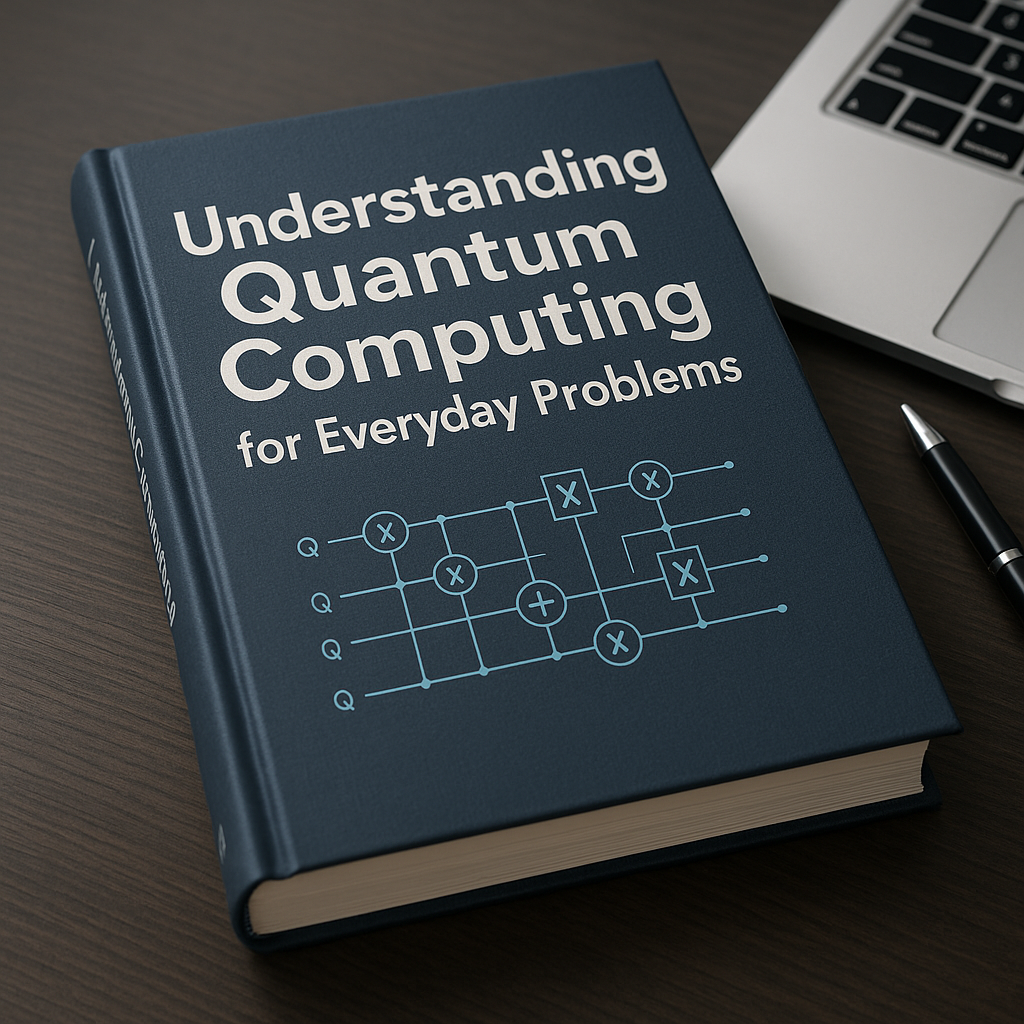
Understanding Quantum Computing Everyday Problems
Quantum computing uses principles like superposition and entanglement to process information in fundamentally new ways. While it seems futuristic, researchers and industry experts are already using quantum methods to tackle problems that overwhelm traditional computers, particularly in cryptography, optimization, and material design (see IEEE Xplore overview). It’s crucial to distinguish between problems quantum computing can accelerate, and those it cannot—most personal and office tasks remain more efficiently handled by conventional devices.
Core Quantum Concepts: What You Need to Know
- Qubits: The basic unit of quantum information, similar to but more versatile than classical bits because it represents 0, 1, or both at once (superposition).
- Superposition: Enables qubits to perform many calculations simultaneously, vastly expanding computational power for some tasks.
- Entanglement: Linked qubits allow combined states to be processed together in ways that classical bits cannot replicate.
- Quantum Gates and Circuits: Quantum equivalents to logic gates; they manipulate qubits to run quantum algorithms (see O’Reilly Practical Guide).
When Quantum Computing Matters—and When It Doesn’t
Some tasks benefit dramatically from quantum approaches, such as:
- Factoring large numbers (relevant for breaking some encryption methods)
- Searching unstructured data sets (for certain types of database queries)
- Modeling highly complex molecular interactions (for drug discovery)
- Solving difficult optimization problems (like delivery routing or resource allocation)
Conversely, routine activities—spreadsheets, email, word processing—see no advantage from quantum methods. Today’s quantum machines remain specialized tools, suited for targeted scientific and industrial use rather than general-purpose home computing (see Wiley Review).
Checklist: Mastering Quantum Computing for Everyday Problems
| Action Step | Purpose | Where to Learn More |
|---|---|---|
| Study core concepts: qubits, gates, superposition | Understand how quantum computers function | Practical Guide |
| Explore quantum algorithms (Shor’s, Grover’s, etc.) | Identify problems quantum computing can solve | Algorithm Overview |
| Compare with classical approaches | Evaluate if quantum solution gives practical advantage | Taxonomy Review |
| Test with simulators or accessible cloud quantum services | Get hands-on experience before real quantum hardware | Major cloud platforms or open-source tools |
| Stay current with research advances | Quantum technology evolves rapidly | IEEE, Wiley, O’Reilly publications |
Step-by-Step: Applying Quantum Computing Logic
- Identify the problem—Is it a complex optimization, cryptographic task, or simulation that challenges classical computers?
- Assess requirements—Does the problem fit any classes where quantum speedup is predicted (e.g., NP-hard optimization)?
- Choose an algorithm—Select proven quantum algorithms for the task, such as Grover’s for search or Shor’s for factoring.
- Model with quantum circuits—Map out the necessary gates and qubits for the algorithm using circuit design tools.
- Simulate or run on cloud platforms—Test code on quantum simulators (IBM Q, Azure Quantum) to evaluate outputs safely and for free.
- Interpret the results—Determine if the quantum solution provides meaningful improvement over classical options.
Illustrative Example: Quantum Search for a PIN Code
Assumptions:
- You have a 4-digit PIN to search among 10,000 possible combinations.
- Quantum access is available via simulator.
Classical brute-force: On average, you test 5,000 guesses to find the correct code.
Quantum approach (Grover’s algorithm): You can expect to find the correct code in approximately √10,000 ≈ 100 attempts, a quadratic speedup.
To implement this:
- Represent each PIN as a unique quantum state among the 10,000 possibilities.
- Construct a quantum circuit for Grover’s algorithm targeting your search.
- Test the workflow using a quantum simulator or cloud service.
While this example demonstrates a potential quantum advantage, it’s important to note that, for most genuine everyday problems like personal finance or text editing, quantum methods offer no practical gain (see IEEE Xplore overview).
Practical Limitations to Keep in Mind
- Access: Most users interact via simulators since true quantum hardware remains limited and expensive.
- Error Rates: Quantum devices are highly susceptible to interference, which affects reliability.
- Software Maturity: Programming environments are evolving and less user-friendly than conventional coding platforms.
- Suitability: Many real-world tasks are simply not faster or easier with quantum computers.
Stay realistic about the current state: quantum computing is powerful for select challenges but is not ready to replace the classical systems that serve everyday needs (see Wiley Review).
Further Learning and Related Topics
- Quantum Computing: Everyday Claims and Real Limits
- Cutting-Edge Breakthroughs in Quantum Computing for 2026
Next step: Select a small, well-defined problem (such as a simple search or small optimization) and try modeling it using a quantum algorithm in a simulator. This hands-on approach builds your intuition for when quantum computing can actually help in everyday problem-solving.


Pingback: Quantum computing beginners: A Practical Guide