
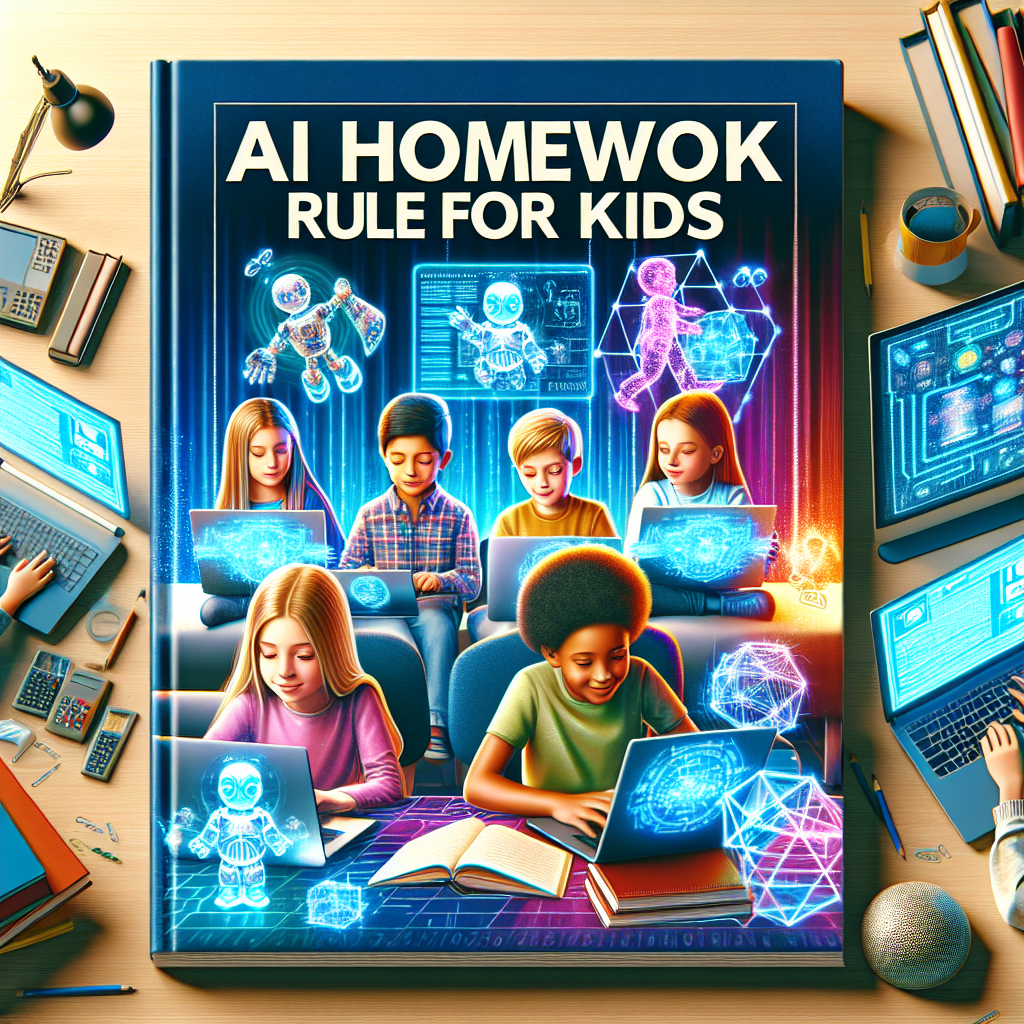
Should you ban AI at home when it comes to your child’s homework? Experts say outright bans aren’t effective. Instead, families benefit from structured, clear AI homework rules for kids that emphasize safety, integrity, and smart guidance. The right rules help children use AI constructively while respecting academic values and privacy.
Why Establish AI Homework Rules at Home?
Artificial intelligence tools—such as chatbots and language generators—are widely accessible and may tempt children to use them for quick answers. However, using AI without oversight can undermine genuine learning and create academic integrity risks. More importantly, schools and state education departments now recommend specific guardrails instead of outright bans for home AI use. (See Fairfax County schools’ AI guidance)
Problems With Blanket Bans
- Kids may secretly use AI, losing trust with adults.
- Families miss opportunities to teach digital literacy and safe practices.
- Bans often conflict with classroom expectations, confusing students.
Key Principles for AI Homework Rules for Kids
Based on leading school and government recommendations, parents should focus on the following principles for home AI homework use:
- Follow School-Provided Instructions: Only use AI tools when teachers permit its use for a given assignment. Consult school or teacher guidelines.
- Maintain Academic Integrity: Remind children to do their own thinking and writing. AI can support research or brainstorming but should not produce completed assignments.
- Parental Permission and Oversight: Always review any AI tools or platforms together before use. Young students especially need direct supervision.
- Choose Age-Appropriate AI Tools: Select only those tools that meet your child’s age and developmental level, as well as your school’s policies. (See Chicago Public Schools’ AI guidance)
- Understand Data Privacy: Investigate what student information, prompts, or work may be stored or used by the AI provider. Discuss these issues openly with your child. (See Pennsylvania Department of Education guidance)
How to Develop Home AI Homework Rules
Building rules begins with a conversation about what AI is, its benefits, and its risks. Next, create guidelines together and post them somewhere visible. Teach your child to ask questions if they are unsure whether an AI tool can be used for a specific assignment.
Suggested AI Homework Rules Checklist
| Rule | What It Means | Who Decides? |
|---|---|---|
| Only use AI with parent approval | Kids ask before using any homework-related AI tool | Parent/guardian |
| Follow teacher assignment instructions | No AI if teacher says not to use it | Teacher/school |
| Don’t copy AI output as final work | Use AI for research ideas or drafts only | Parent and child |
| Check AI privacy settings | Make sure no personal data is required or saved | Parent/guardian |
| Discuss questionable results with an adult | Get help if answers seem wrong or biased | Parent/guardian |
What Parents Should Watch For
- Changing School Policies: Schools often update their AI use guidelines. Stay in touch with teachers to stay current on what’s allowed.
- Age-Restricted Tools: Do not allow children to sign up for AI platforms that require users to be 13 or older without permission and supervision.
- Quality of AI Output: Encourage your child to review any information generated and cross-check facts with reliable sources.
Illustrative Example: Setting Family AI Homework Rules
Assumptions: Jane is a 12-year-old student whose teacher allows AI-assisted brainstorming for a history project, but final essays must be original work. Her parent wants to set appropriate guidelines at home.
- The parent and Jane review the school’s AI policy together and see brainstorming is acceptable, but copying is not.
- Jane asks her parent’s permission to use a specific classroom-approved AI tool to brainstorm project ideas.
- Together, they check the AI tool’s privacy policy to ensure no personal data will be stored or sold.
- Jane uses the AI tool to generate a list of possible project topics, then selects one and researches it independently.
- The final essay is written by Jane with no AI text copied into her submission.
Balancing Benefits and Safeguards
Allowing AI under defined rules helps kids build digital literacy and practical research skills. It also maintains trust and keeps learning authentic. Schools and education authorities continually update best practices as AI technology evolves, so regular family check-ins on rules are wise.
When to Reconsider or Update Your Family AI Homework Policy
- New School Guidelines: Update rules if your school issues new AI homework guidance.
- Tool Changes: Adjust if the AI platform updates its privacy or age requirements.
- Child’s Age or Needs: As your child grows, revisit what’s appropriate for their maturity level and learning needs.
Related Topics
Next step: Review your school’s AI homework policy and schedule a family discussion about which guidelines are right for your home. Keep your rules visible and revisit them regularly for clarity and safety.


Pingback: AI Homework Guardrails: Prevent Kid Mistakes at Home