Tornado safety in California starts with a plan made before severe weather arrives. This page helps you record your shelter location, alert sources and household responsibilities. It is a preparation worksheet, not a live warning service. Follow current instructions from local emergency officials.
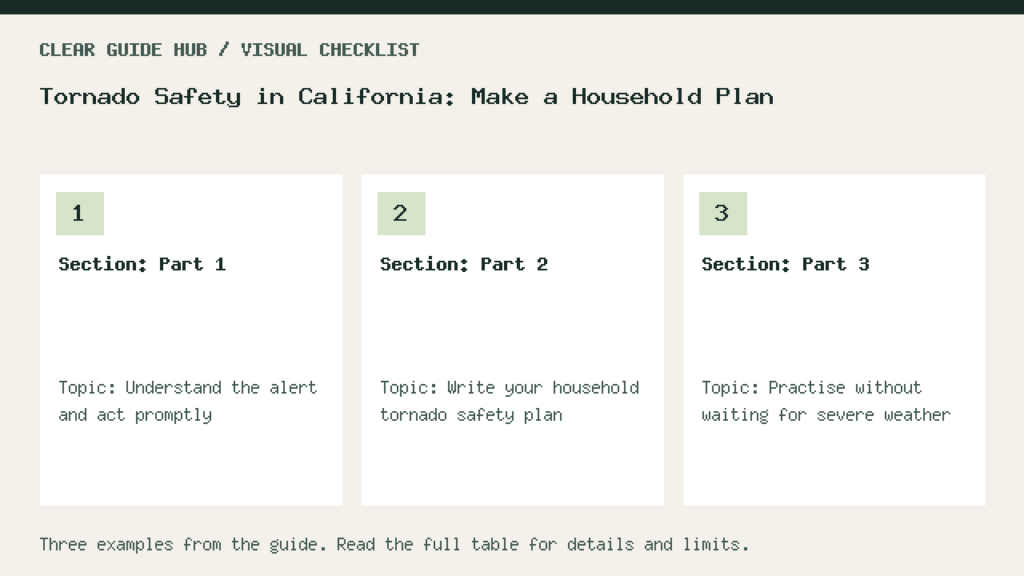
Understand the alert and act promptly
The National Weather Service tornado safety guide distinguishes a watch, when conditions favour tornadoes, from a warning, when a tornado is occurring or imminent. A warning calls for immediate protective action; do not wait to see a funnel.
The NWS during-a-tornado instructions advise sheltering in a basement or an interior room on the lowest floor of a sturdy building, away from windows. Protect your head and neck. Mobile homes are not safe tornado shelters: arrange access to a sturdy shelter before dangerous weather. Vehicles and outdoor locations are also poor shelter choices. Read the official guidance for your situation and follow local alerts.
Write your household tornado safety plan
| Field | Your entry |
|---|---|
| Primary shelter | Exact building and room, not just “downstairs” |
| Access | Who has keys and when the building is accessible |
| Official alerts | Local weather office and local emergency notification channel |
| Assistance | Who helps each person with mobility or communication needs |
| Pets | Where carriers or leads are kept |
| Family contact | Contact method if household members are separated |
Discuss this sheet with everyone who uses the home. If the planned room is locked, inaccessible or too small for someone using mobility equipment, the plan needs revision before a storm. A label on a worksheet does not certify a room as a safe room.
Practise without waiting for severe weather
On a calm day, walk the route to the planned shelter together. Check whether furniture, stored boxes or locked doors obstruct it. Ask each person to explain where they would go if an alert arrived while they were in another room. Record unresolved access questions and discuss them with your building manager or local emergency management office.
For a household in a manufactured home, identify a real sturdy building and confirm access ahead of time. Do not write down a nearby building merely because it looks substantial; it may be locked or unavailable when needed.
Prepare a compact reference card
Keep the shelter plan with essential contact details and a list of medicines or equipment household members may need. Decide where to keep a flashlight, charged communication device and necessary supplies so they are easy to find. Avoid putting sensitive personal information on a publicly shared version of the plan.
Use current local information
Start at weather.gov to find forecasts and alerts for your location. Recheck the plan after moving home or when household needs change. A past quiet season, a distant photograph or a general article cannot tell you whether your address is safe during a current warning.
Updated October 8, 2026: This guide replaces an incomplete earlier version. Sources and examples have been clarified.
Read how Clear Guide Hub uses sources and handles corrections, or report a problem with this guide.