
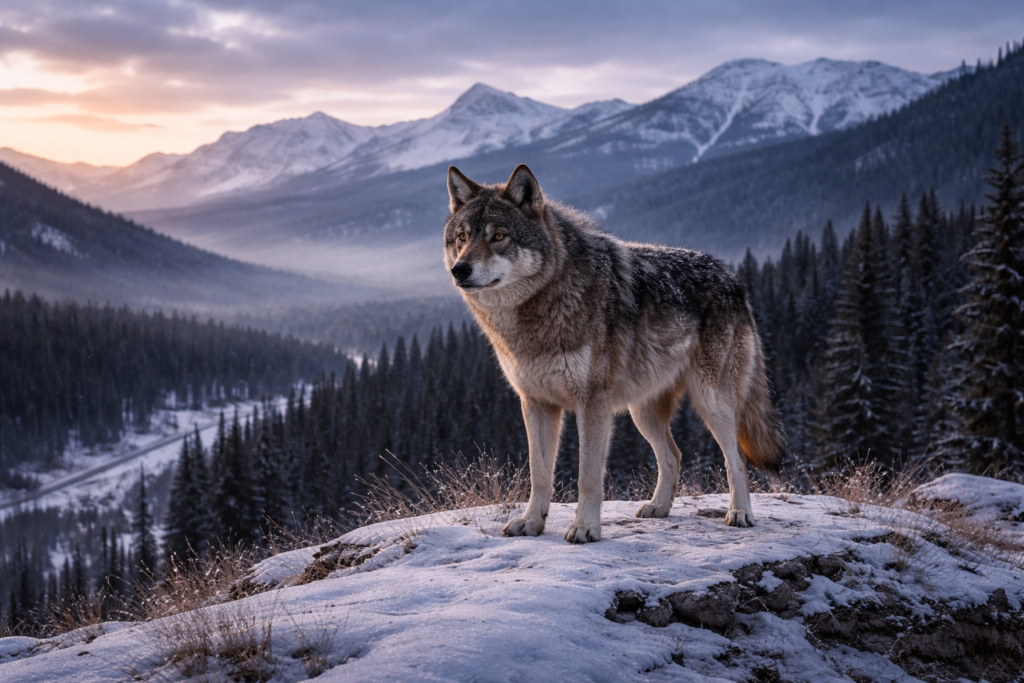
Yellowstone wolves remain one of America’s best-known wildlife success stories. However, that success is under growing pressure. The biggest new threat is not inside Yellowstone National Park itself. Instead, it is what happens when wolves cross invisible borders into Montana, Idaho, and Wyoming, where hunting, trapping, and aggressive state management policies can quickly turn protected animals into legal targets.
At the end of 2024, Yellowstone had 108 wolves in nine packs. That was down from 124 wolves in eleven packs at the end of 2023, according to Yellowstone Wolf Project reports. Those shifts do not prove one single cause, but they add urgency to concerns about mortality inside the wider Greater Yellowstone ecosystem.
What is the new threat to Yellowstone wolves?
The new threat to Yellowstone wolves is intensified risk once they leave park boundaries. Wolves inside the park are protected, but dispersing wolves and even whole packs near the edges face legal hunting and trapping in surrounding states. As a result, the park can function like a refuge bordered by danger.
That issue has become more serious in recent years. Reporting based on Yellowstone Wolf Project and National Park Service data found that legal kills of Yellowstone wolves outside the park rose sharply after 2020 compared with the previous decade.
Meanwhile, Montana Fish, Wildlife & Parks says it is committed to long-term wolf survival while also managing the population and addressing livestock conflicts. Yet Montana’s final gray wolf conservation and management plan released in March 2025 called for reducing the statewide population by as much as 60%, which alarmed conservation groups focused on Yellowstone-adjacent packs.
Why wolves outside Yellowstone are so vulnerable
Yellowstone wolves do not understand state lines. Young wolves disperse. Packs expand territories. Some animals follow prey into surrounding lands. Therefore, a wolf that is fully protected one day can become vulnerable the next simply by crossing the park boundary.
This is especially important because Yellowstone wolves are unusually visible and well studied. Many are habituated to the presence of people at legal viewing distances, which helps tourism and research. Yet that same visibility may make some wolves more predictable near park edges. Conservation groups have argued that this creates a special risk compared with less-observed wolves elsewhere.
In other words, Yellowstone’s fame does not guarantee safety. In fact, it can heighten the stakes.
How state wolf policies are reshaping the risk
State policy now plays a larger role in the future of Yellowstone wolves than many visitors realize. In Montana, regulators adopted some incremental protections in 2024, including steps meant to reduce the odds that entire Yellowstone packs could be wiped out just outside the park and a ban on using motion-tracking devices in wolf hunting. Even so, advocates say the broader policy direction still encourages lower wolf numbers across the state.
Idaho also continues to pursue a significant reduction in its wolf population. According to Idaho Capital Sun, the state aims to lower average wolf numbers substantially over several years. That matters because dispersing Yellowstone wolves do not remain neatly within Montana or Wyoming.
At the federal level, legal battles have continued over whether gray wolves in the Northern Rockies need stronger Endangered Species Act protections or a new national recovery plan. Those disputes show that wolf policy remains unsettled, and Yellowstone wolves are caught in the middle.
Why this matters beyond wolf conservation
This story is not only about wolves. It is also about ecology, tourism, science, and regional identity.
Yellowstone’s wolf program has become one of the world’s most important wildlife research efforts. The park says wolves help scientists understand predator-prey dynamics and broader ecosystem relationships. In addition, wolf watching draws large public interest and supports nearby communities that benefit from wildlife tourism. Yellowstone received more than 4.76 million recreation visits in 2025, showing the scale of public interest in the park’s wildlife experience.
There is also a deeper management question. If wolves are protected in the park but heavily pressured outside it, then long-term conservation success may depend less on park rules and more on what neighboring states choose to do. That creates tension between state authority, federal oversight, local ranching concerns, and the national value of Yellowstone’s wolves.
For broader context, see our guide on wildlife corridor protection and read our article about balancing conservation with rural livelihoods.
What should happen next?
A practical response would focus on a few clear steps.
1. Maintain stronger buffer protections near Yellowstone
Targeted limits near park boundaries can lower the chance that famous research packs are lost soon after leaving protected land. Montana has taken some partial steps in that direction, but the debate is far from settled.
2. Improve transparent wolf monitoring
Good policy needs credible numbers. Annual Yellowstone reports already provide strong detail inside the park. Similar transparency across the wider ecosystem would improve public trust.
3. Weigh economic value alongside conflict management
Wolves can create livestock conflicts, which are real and politically powerful. However, they also produce tourism, research value, and global attention for the region. Policymakers should measure both sides of that ledger.
4. Clarify the federal role
Because court fights over wolf protections are ongoing, the long-term rules remain uncertain. Clearer federal guidance could reduce repeated legal conflict.
Mistakes to avoid when discussing Yellowstone wolves
One common mistake is assuming Yellowstone wolves are safe because the park protects them. That is only partly true. Many risks increase once wolves roam beyond the boundary.
Another mistake is treating this as only an environmental issue. In reality, it is also a policy, economics, tourism, and land-use issue.
Finally, avoid oversimplifying the debate. Ranchers, hunters, wildlife managers, researchers, and conservationists all bring different priorities. Strong reporting should acknowledge that complexity while staying clear about the data.
Conclusion
Yellowstone wolves face a critical new threat, and it is largely a border problem. Inside the park, wolves remain protected and closely studied. Outside it, they can face hunting, trapping, and aggressive population-reduction policies that reshape the future of packs connected to Yellowstone.
Therefore, the real question is no longer whether Yellowstone can protect wolves within its boundaries. The bigger question is whether the wider region will allow those wolves to survive once they move beyond them.
7. FAQ
Why are Yellowstone wolves still at risk if they live in a national park?
Yellowstone wolves are protected inside the park, but many leave park boundaries while dispersing or following prey. Once outside, they may face legal hunting or trapping depending on state rules.
What states affect wolves around Yellowstone?
Montana, Idaho, and Wyoming all influence the future of wolves connected to Yellowstone because the park spans the Greater Yellowstone ecosystem and wolves move across those borders.
Has the Yellowstone wolf population declined recently?
Yes. Yellowstone reported 124 wolves in 2023 and 108 wolves in 2024. Population changes can happen for several reasons, but the decline has increased concern about outside mortality and management pressure.
Why do conservation groups oppose current wolf policies?
Many groups argue that aggressive hunting and trapping rules, plus statewide reduction targets, can harm Yellowstone-linked packs and undermine long-term wolf recovery in the region.
8. Internal linking suggestions (3)
- Essential Personal Finance Tips for Smart Money Growth
- Artificial Intelligence: The Incredible and Powerful Innovation Changing Our Future
- How to Choose the Right Productivity Tools for Everyday Work
9. External authority sources (2–3)
- National Park Service Yellowstone Wolf Project reports
- Montana Fish, Wildlife & Parks wolf management program
- National Park Service wolf ecology and management pages